A shipment gets flagged, not because it’s clearly illegal, but because no one is completely sure what it actually contains or how it should be classified. That’s the reality compliance teams are facing today.
What used to be a relatively structured process, classifying goods, screening parties, and moving shipments, has now evolved into something far more complex. Regulations are expanding, product definitions are blurring, and enforcement is becoming stricter across the globe. For freight forwarders, compliance is no longer a periodic task. It’s a constant operational challenge that directly impacts speed, cost, and risk.
A New Era of Export Scrutiny
Global trade compliance has entered a new phase. Geopolitical tensions, including the Ukraine conflict, instability in the Middle East, and ongoing U.S.–China trade dynamics, have triggered a surge in regulatory activity. Governments are actively tightening controls, expanding sanctions, and increasing enforcement efforts.
Regulatory bodies are not just updating rules occasionally, they are doing so continuously. This means freight forwarders must stay aligned with evolving requirements across multiple jurisdictions at the same time. The cumulative effect is significant. Every new regulation expands the scope of what needs to be checked, verified, and documented.
Dual-Use Goods are No Longer Edge Cases
For many years, export controls focused mainly on clearly defined military or high-risk goods. Dual-use items existed, but they were relatively limited and manageable. That’s no longer the case.
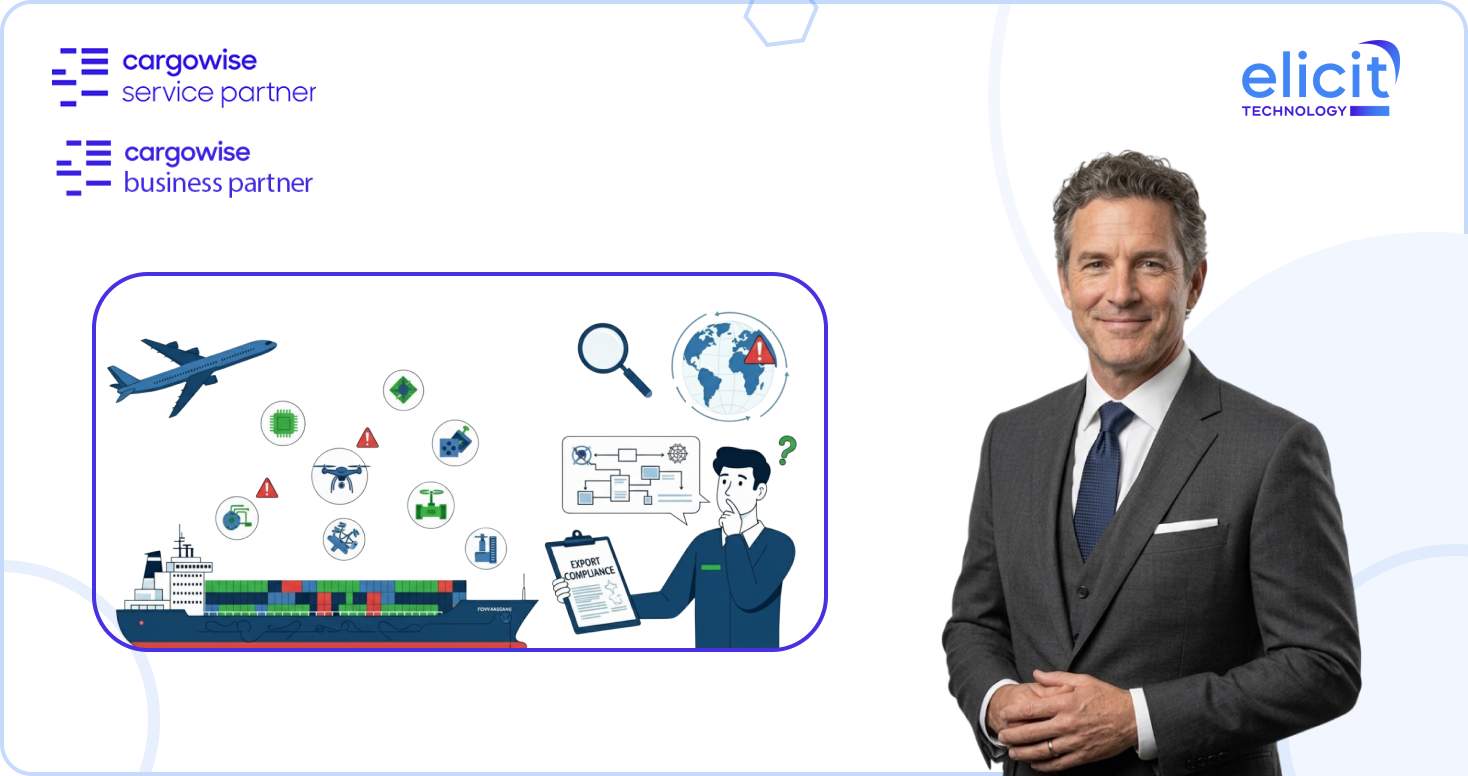
Today, dual-use goods are everywhere. These are products that can be used for both civilian and military purposes, and they now include a wide range of everyday items such as electronics, industrial equipment, and communication devices. What makes this particularly challenging is that the risk often lies not in the finished product itself, but in the components it contains.
A shipment that appears routine on the surface may actually fall under export control regulations because of specific internal parts or technical specifications. This shift has transformed compliance from a straightforward classification exercise into a much deeper evaluation process.
Technology is Blurring Classification Boundaries
Modern technology has added another layer of complexity. Products today are no longer single-purpose; they are built with multiple integrated components, each with its own regulatory implications.
Take a common example like a smartphone. It combines advanced processors, sensors, and communication systems. Depending on their capabilities, any one of these components could be subject to export controls. This means a single product may fall under multiple classification categories simultaneously.
Additionally, software and firmware can change the compliance status of a product. Hardware that is unrestricted in its base form may become controlled once specific software is applied. This makes classification more dynamic and requires a deeper understanding of both the product and its functionality.
Global Regulations are No Longer Aligned
One of the biggest challenges today is the lack of global consistency in export controls. In the past, frameworks like the Wassenaar Arrangement helped align regulations across countries. That alignment is weakening.
Countries are now introducing their own independent rules, creating a fragmented compliance landscape. The same product may be classified differently depending on the jurisdiction. For freight forwarders, this means a single shipment could require evaluation against multiple regulatory frameworks.
For example, a shipment moving from one country to another may need to comply with export rules at origin, import rules at destination, and additional controls if it passes through other regions. Each layer adds complexity and increases the risk of error.
Transshipment and Indirect Risk are Under the Spotlight
Regulators are also paying closer attention to how goods move through the supply chain. Transshipment routes, where goods pass through intermediate countries, are now a major focus area.
Authorities are concerned about goods being routed through regions with less stringent controls to bypass restrictions. As a result, compliance is no longer limited to origin and destination. It must cover the entire journey, including all transit points and involved parties.
This means forwarders need visibility not just into shipments, but into the broader network through which those shipments move.
Freight Forwarders as Compliance Gatekeepers
Freight forwarders are increasingly being held accountable as active participants in compliance, not just intermediaries. Regulators expect forwarders to exercise due diligence and identify potential risks.
However, this expectation comes with a challenge. Forwarders often have less detailed information than other stakeholders in the supply chain. They rely heavily on customer-provided data, such as product descriptions and HS codes, which may not always be accurate or complete.
This creates a gap between responsibility and visibility. Forwarders are expected to make compliance decisions with limited insight, increasing both operational pressure and risk exposure.
The Complexity of Real-World Classification
In practice, classification is rarely straightforward. Consider a shipment described as “thermal imaging equipment.” Whether it falls under export control depends on specific technical details such as frame rate and resolution.
To determine the correct classification, compliance teams may need to:
- Review detailed product specifications
- Compare technical parameters against control lists
- Interpret regulatory thresholds across jurisdictions
This level of analysis is required for just one shipment. When scaled across hundreds or thousands of shipments, the workload becomes substantial.
Increasing Trade Volumes Add to the Pressure
At the same time, global trade volumes, especially in sectors like manufacturing and electronics, continue to grow. These are the very categories most affected by dual-use regulations.
This creates a difficult balance for logistics organizations. They must maintain speed and efficiency while ensuring strict compliance. Moving too quickly increases risk, while being overly cautious can lead to delays and operational bottlenecks.
This tension is one of the defining challenges of modern logistics.
Why Traditional Compliance Methods are No Longer Enough?
Manual processes and fragmented systems are no longer sufficient to handle today’s compliance demands. Static checks and disconnected workflows can lead to missed risks, inconsistent decisions, and delays.
What’s needed is a more integrated and intelligent approach, one that connects compliance directly to operational systems and provides real-time visibility into risks.
Turning Compliance into a Strategic Advantage
While compliance has become more complex, it also presents an opportunity. Organizations that manage compliance effectively can gain a competitive edge.
They can move shipments with greater confidence, reduce delays, and build stronger trust with customers. Instead of being a barrier, compliance can become a driver of operational excellence.
How CargoWise Users can Stay Ahead?
For CargoWise users, addressing these challenges means leveraging advanced compliance capabilities within the platform. Solutions like ComplianceWise help integrate screening, classification, and risk assessment directly into logistics workflows.
These tools enable organizations to manage goods, parties, and destinations more effectively while maintaining alignment with global regulations. With emerging AI-driven capabilities, classification and screening can become faster and more scalable, helping teams keep up with increasing demands.
Conclusion
Compliance is no longer something that happens in the background. It is now central to how logistics operations function.
As regulations continue to evolve and scrutiny increases, freight forwarders must adapt their approach. The focus must shift from simply meeting requirements to proactively managing risk.
At Elicit, we help CargoWise users navigate the growing complexity of global trade compliance with confidence. As an official CargoWise Service Partner, we support logistics organizations in aligning their systems with evolving regulations and optimizing compliance workflows.
From configuring compliance processes within CargoWise to strengthening screening and classification capabilities, we ensure your operations are prepared for today’s challenges and tomorrow’s demands.
If compliance is becoming harder to manage, now is the time to take a smarter approach. Connect with Elicit and turn compliance into a strength for your business.