The biggest challenge in logistics today isn’t disruption itself, it’s the delay in recognizing how that disruption will impact your shipments.
While headlines highlight geopolitical tensions and trade route instability, operations teams are dealing with a much more immediate reality. Shipments already in transit are being rerouted, cargo that hasn’t been loaded is being reassessed, and future bookings are becoming increasingly uncertain.
Right now, global supply chains are under pressure once again. The ongoing conflict in the Middle East, one of the most critical corridors for global energy and container trade, is creating ripple effects across ocean and air networks.
As of March 12, 2026, aggregated CargoWise data shows that more than 54,000 ocean shipments and over 200 vessels have been affected. That translates to nearly two out of every five logistics organizations using CargoWise experiencing active disruption.
But here’s where the industry is evolving.
It’s no longer about asking “what happened?”
The real question is “what risk is building, and what should we do next?”
Why Traditional Disruption Tracking is No Longer Enough?
For years, logistics teams have relied on reactive monitoring.
They track:
- Port closures
- Flight cancellations
- Vessel delays
- Weather alerts
But by the time these events are officially reported, the impact has already started spreading across the supply chain.
Cargo may already be delayed. Capacity may already be tight. Customers may already be affected.
This reactive approach creates a constant cycle of firefighting, responding to issues instead of preventing them.
In today’s environment, that’s no longer sustainable.
What Makes Today’s Disruptions More Complex?
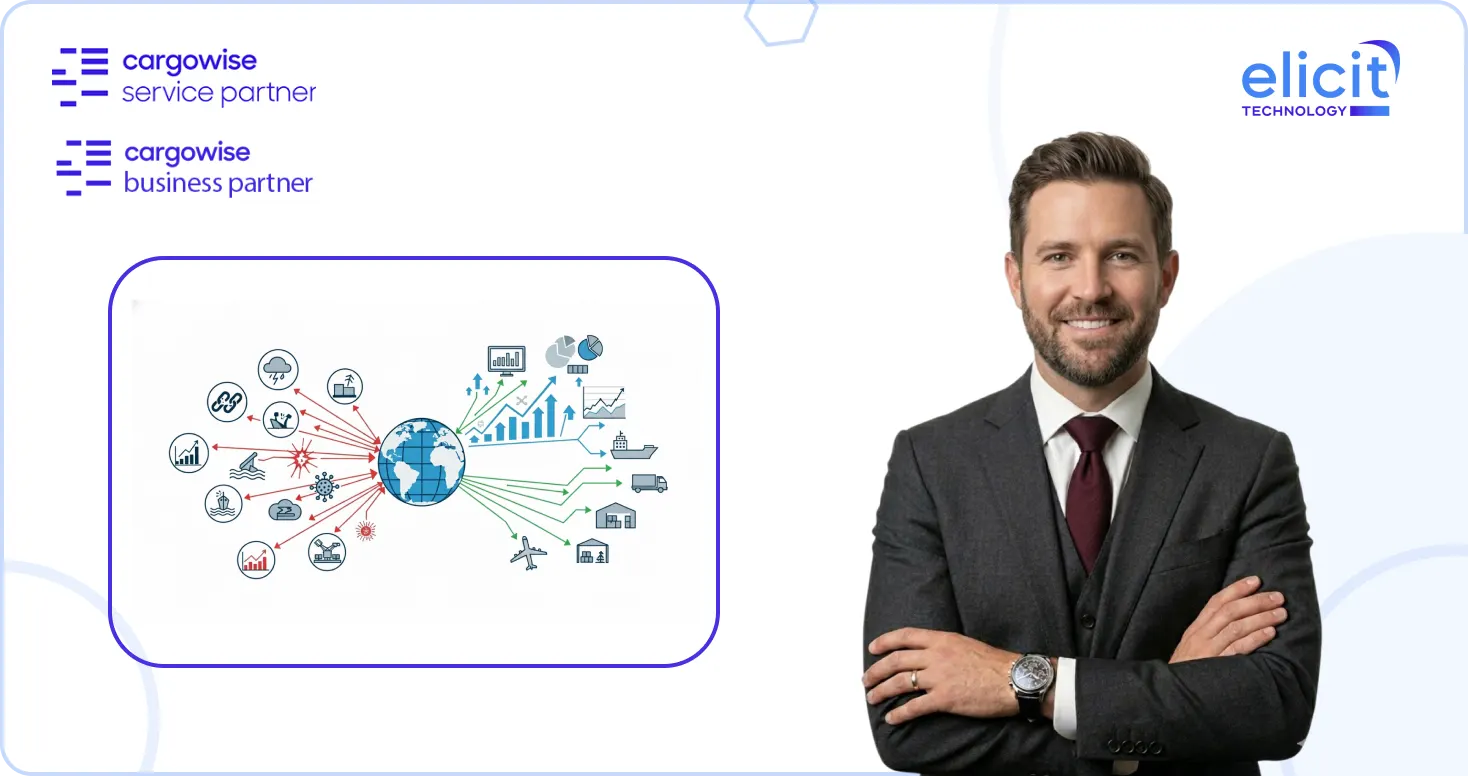
Modern supply chains are highly interconnected. A disruption in one region doesn’t stay localized, it quickly affects global trade lanes.
The current Middle East situation is a clear example.
Increased security concerns around the Strait of Hormuz have led to:
- Vessel rerouting and service suspensions
- Changes in port rotations
- Booking restrictions by carriers
- Airspace limitations affecting cargo flights
Recent reports of cargo vessels being struck near the Iranian coast highlight just how volatile the situation remains.
And because there’s no clear resolution timeline, logistics organizations are forced to make decisions with incomplete information.
Understanding the Hidden Risk: Capacity Pressure
While visible disruptions like rerouted vessels or cancelled flights are easy to track, the more critical risk often develops quietly.
That risk is capacity pressure.
Capacity risk doesn’t happen overnight. It builds gradually when three key factors fall out of balance:
Demand: Increasing need for space on a trade lane
Supply: Limited vessel capacity or adjusted schedules
Carrier behaviour: Higher booking rejection rates
When these factors shift, forwarders may struggle to secure space, even before any official disruption is announced.
This is the early signal that most teams miss.
What the Data Reveals About Current Market Conditions?
CargoWise risk intelligence provides a deeper understanding of how disruption is affecting global trade.
Current insights show:
Around 5% of global containerized volumes are impacted by booking suspensions linked to the Middle East crisis
Booking rejection rates for affected regions increased by over 140% between late February and mid-March
Meanwhile, global booking rejection rates across other trade lanes have decreased by 7%
This tells us that disruption is not evenly distributed. It’s concentrated, but its effects are influencing the wider network.
Which Trade Lanes are Under Pressure?
Stable Trade Lanes
For now, some major trade routes remain relatively stable:
Asia–Europe continues to show capacity surplus
Europe–North America also remains balanced
Despite ongoing geopolitical uncertainty, these corridors are not yet experiencing significant capacity constraints.
Emerging Risk: Asia–North America
However, a different trend is emerging on the Asia–North America trade lane.
From late March onward, capacity is expected to tighten due to:
- Reduced vessel deployment
- Adjustments in carrier schedules
- Strategic supply control by carriers
This shift is being driven by supply-side changes, not demand.
And that’s exactly why forward-looking intelligence matters.
What is Forward-Looking Risk Intelligence?
Forward-looking risk intelligence focuses on identifying early signals of disruption before they become operational problems.
Instead of waiting for events to happen, it analyzes patterns such as:
- Demand vs. supply imbalance
- Booking acceptance and rejection trends
- Carrier behavior changes
- Upcoming schedule adjustments
By tracking these signals, logistics teams can anticipate where pressure is building.
For example:
If booking rejections increase while demand remains steady, it indicates tightening capacity, even if shipments are still moving normally.
That’s the moment to act.
How Logistics Teams can Use These Insights?
When forward-looking intelligence is applied effectively, it allows teams to:
- Secure cargo space earlier on critical routes
- Adjust booking strategies before capacity tightens
- Inform customers proactively about potential risks
- Avoid last-minute rate increases in spot markets
- Maintain service reliability during disruptions
This transforms operations from reactive to proactive.
Why this Shift Matters More than Ever?
In a market where disruption is constant, the competitive advantage no longer comes from how well you react, it comes from how early you can anticipate.
Forwarders who rely only on real-time updates will always be one step behind.
Those who use predictive insights can:
- Plan ahead
- Reduce operational risk
- Improve customer trust
- Protect profit margins
As highlighted by CargoWise Market Intelligence:
“Capacity risk is about understanding where demand is building faster than scheduled supply, weeks before it becomes operational disruption.”
How CargoWise Supports Forward-Looking Decision Making?
CargoWise enables this shift by combining multiple data sources into actionable intelligence.
It brings together:
- Shipment-level data
- Booking behaviour trends
- Demand and supply signals
This allows forwarders to see beyond individual shipments and understand the broader conditions affecting their operations.
Instead of asking “Where is my shipment?”, teams can now ask:
- “Which shipments are at risk next?”
- “Which trade lanes are tightening?”
- “What should we do before disruption escalates?”
This is the future of logistics decision-making.
Conclusion
Disruption isn’t going away. If anything, it’s becoming more frequent and more complex.
The only way forward is to shift from reactive operations to proactive intelligence.
At Elicit, we help CargoWise users configure their systems to unlock this level of insight, combining workflow automation, visibility tools, and data-driven decision-making.
From optimizing how risk signals are interpreted to enabling smarter operational workflows, we ensure your CargoWise environment supports forward-looking strategies.
If you want to stay ahead of disruption instead of chasing it, connect with Elicit, your trusted CargoWise service partner, and build a more resilient, intelligence-driven logistics operation.