A delayed vessel. A missed connection. A shipment that arrives days later than promised.
Most logistics teams don’t realize the real issue isn’t the delay itself, it’s the lack of visibility before the delay happens.
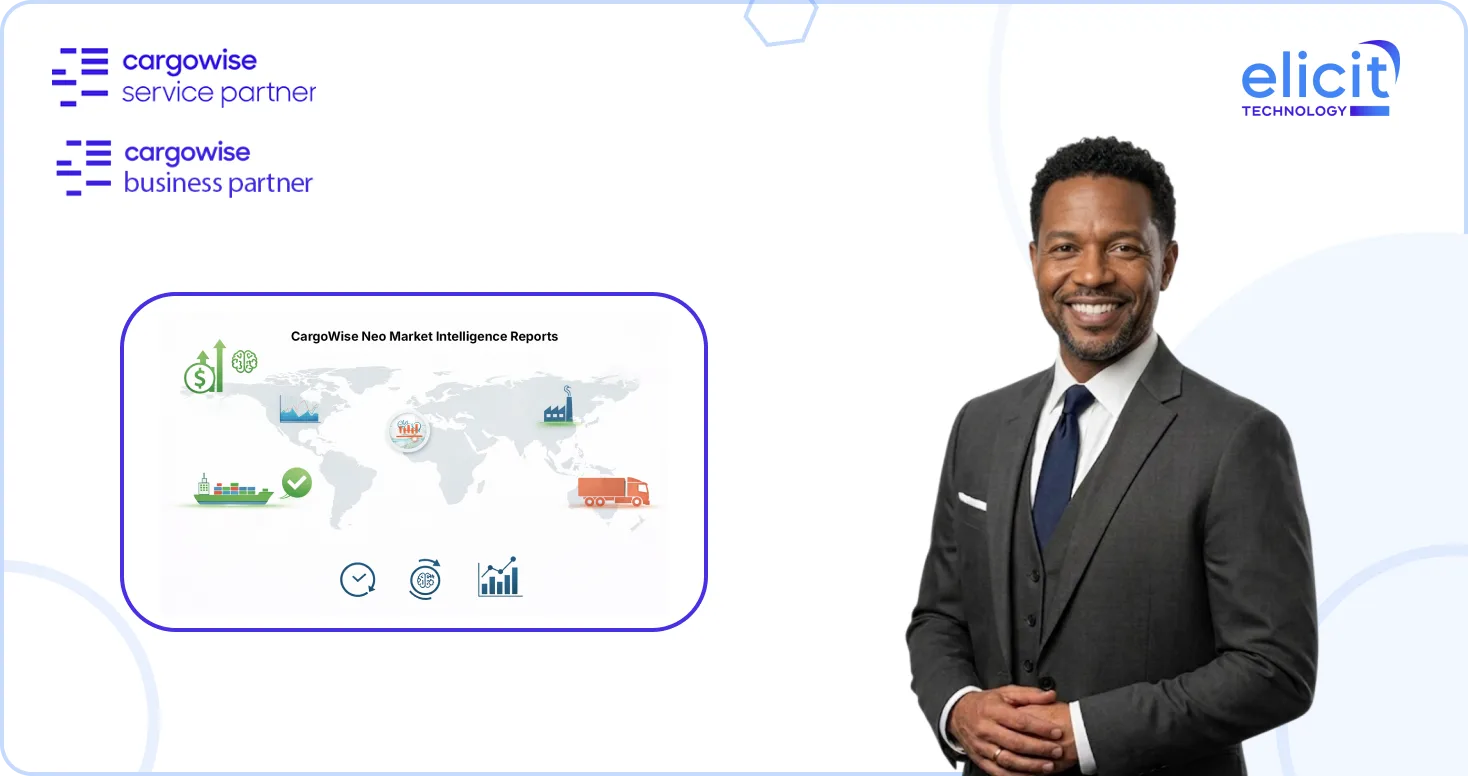
That’s exactly where CargoWise Neo Market Intelligence reports step in. Instead of reacting to disruptions after they hit operations, these reports give you a market-wide view of port and carrier performance, helping you make smarter decisions before your shipment is impacted.
Let’s break down what this means for your day-to-day operations, and why more forwarders are starting to rely on these insights to stay ahead.
Why Market Intelligence Matters More than Ever?
Global trade today doesn’t move in a straight line. Routes shift. Ports slow down. Carriers adjust schedules without much notice.
What used to be a predictable flow has now become a dynamic, constantly changing network.
In this environment, relying only on shipment tracking or milestone updates is no longer enough.
You need answers to questions like:
- Which ports are consistently delaying shipments?
- Which carriers are meeting their schedules, and which aren’t?
- Where should you reroute to avoid delays?
- How do you choose the best port or carrier for your next booking?
CargoWise Neo Market Intelligence reports are designed to answer exactly these questions, using real operational data across the network.
What are CargoWise Neo Market Intelligence Reports?
At their core, these reports give you a market-wide performance view, not just your shipments, but broader patterns across ports and carriers.
They allow you to:
- Compare port performance globally
- Evaluate carrier reliability
- Identify risk zones before disruptions escalate
- Explore alternative routing options
- Improve transit time planning
Instead of guessing or relying on past experience, you’re making decisions backed by real data.
There are two key reports available:
- On-Time Performance Report
- Turnaround Time Report
Each one focuses on a different aspect of shipment performance, and together, they give you a complete picture.
Understanding On-Time Performance: Are Your Shipments Meeting Expectations?
Every shipment starts with a promise, an expected departure or arrival time.
The On-Time Performance report helps you understand one simple but critical thing:
How often are those promises actually being met?
This report compares:
- Actual departure or arrival times
- Against the first estimated time received during booking
This difference tells you whether a shipment performed as expected or deviated.
From an operational standpoint, this is huge.
Because delays don’t just happen randomly. They follow patterns.
What Can You Identify with On-Time Performance?
With this report, you can quickly spot:
- Ports where delays are consistently higher
- Carriers that frequently miss schedules
- Trade lanes with better reliability
- Regions where performance is improving or declining
Instead of reacting to a delay after it happens, you can avoid it entirely by choosing better-performing options.
Visual Insights That Make Decisions Faster
The report presents data in a way that’s easy to interpret:
- Map View shows ports as circles
- Larger circles = higher container volume
- Colors reflect delay categories
- Bars View ranks ports by volume and performance
- Helps compare multiple ports side by side
These visualizations allow teams to quickly identify risk areas without digging through raw data.
Turnaround Time: What’s Really Happening Inside Ports?
If On-Time Performance tells you what happened, Turnaround Time explains why it happened.
This report focuses on how long containers spend inside ports, across key milestones like:
- Gate In to Departure
- Freight Loaded to Vessel Departure
- Arrival at Gate Out
- Freight Unloaded to Gate Out
These timelines reveal where delays are actually occurring.
Why is Turnaround Time Critical for Planning?
A shipment delay often starts long before the vessel leaves.
For example:
- Containers may sit too long before loading
- Congestion may delay unloading
- Gate-out processes may slow down delivery
Turnaround Time reports highlight these hidden inefficiencies.
This helps you:
- Identify bottlenecks inside specific ports
- Compare port performance across regions
- Adjust routing strategies based on real performance
- Predict delays before they impact delivery timelines
- Using Filters to Dig Deeper Into Performance
One of the most powerful aspects of these reports is the ability to analyze data from multiple angles.
You can filter by:
- Time Period (up to the last six months)
- Port of Loading (POL)
- Port of Discharge (POD)
- Carrier Code
- Event milestones (for turnaround time)
This flexibility allows you to:
- Compare a single port against multiple regions
- Analyze specific carrier performance
- Study trends over time
- Evaluate trade lanes in detail
For example, you can compare:
- A specific port vs. all ports in a country
- A carrier’s performance across different routes
- Recent performance vs. past trends
This level of analysis helps move from reactive decisions to proactive planning.
From Data to Decisions: Where the Real Value Lies
Having data is one thing. Using it effectively is what creates real impact.
CargoWise Neo Market Intelligence reports help logistics teams shift from:
Guesswork → Data-driven decisions
Reactive operations → Proactive planning
Isolated shipment tracking → Network-wide visibility
This leads to:
- Better carrier selection
- More reliable routing decisions
- Reduced delays and disruptions
- Improved customer communication
- Stronger operational confidence
What Most Teams Overlook?
Many teams focus only on shipment-level updates.
But the real advantage comes from understanding patterns across the network.
For example:
- A port may look fine on one shipment, but show consistent delays across others
- A carrier may perform well in one region but poorly in another
- A trade lane may be stable today, but trending toward congestion
Market Intelligence reports uncover these patterns, and that’s where the real competitive edge lies.
Why does this Matter for Forwarders Today?
Today’s logistics environment is no longer stable.
Between geopolitical disruptions, port congestion, and shifting carrier strategies, the margin for error is shrinking.
Forwarders who rely only on traditional tracking will always be one step behind.
But those who use Market Intelligence:
- Identify risks earlier
- Adjust faster
- Communicate better with customers
- Deliver more reliable service
That difference directly impacts customer trust and long-term business growth.
Conclusion
Seeing where your shipment is doesn’t tell you what’s coming next.
Understanding performance trends, risk patterns, and operational obstacles that’s what actually helps you stay ahead.
CargoWise Neo Market Intelligence reports bring that layer of intelligence directly into your workflow.
But getting the most out of these reports requires the right configuration, data interpretation, and alignment with your operational strategy.
Need Help Unlocking the Full Value of CargoWise Neo?
At Elicit, as an official CargoWise Service Partner, we help logistics businesses go beyond basic usage and truly leverage CargoWise capabilities.
We support you with:
- Setting up and optimizing Market Intelligence reporting
- Aligning reports with your operational workflows
- Identifying performance gaps across ports and carriers
- Building data-driven routing strategies
- Training teams to use insights effectively
If you’re ready to move from visibility to real decision-making power, connect with Elicit, and let’s make your CargoWise system work smarter for your business.