Paper Bills Slow You Down — Digital Bills Keep Cargo Moving
In ocean freight, paperwork has always been a necessary evil. House Bills of Lading are critical documents, but when they exist only on paper, they introduce delays, risk, and friction at the worst possible moments. Couriers get delayed, originals get misplaced, and release timelines stretch longer than planned.
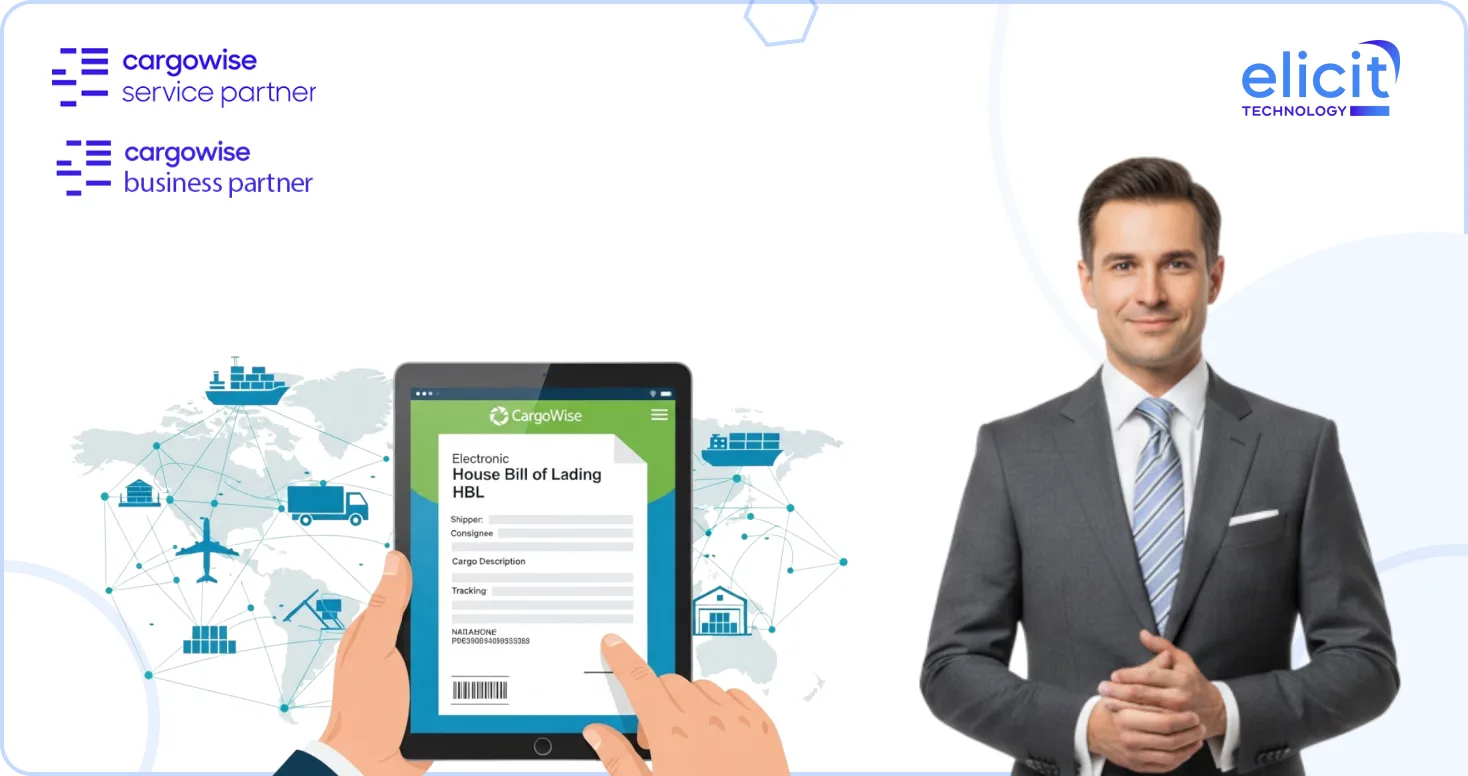
That’s exactly why electronic House Bills of Lading (eHBLs) are gaining traction across global forwarding networks. By removing paper from the process, forwarders gain speed, control, and visibility, without compromising legal integrity.
With CargoWise integrated directly with Bolero, logistics teams can publish, manage, and exchange electronic House Bills securely, all within their existing CargoWise workflows.
What is an Electronic House Bill of Lading (eHBL)?
An electronic House Bill of Lading is a legally recognized, paperless version of a traditional House Bill. It carries the same commercial and contractual value but exists entirely in digital form.
Instead of printing, couriering, and manually releasing documents, eHBLs are issued, transferred, and surrendered electronically between parties. This makes them especially valuable in time-sensitive sea freight movements where delays at destination can trigger demurrage, storage, or customer dissatisfaction.
CargoWise enables eHBLs by integrating directly with Bolero’s title registry, ensuring authenticity, traceability, and secure ownership transfer throughout the shipment lifecycle.
Why Forwarders are Moving Toward eHBLs?
The shift toward electronic House Bills isn’t about technology for its own sake. It’s driven by real operational pain points that paper can no longer solve efficiently.
Forwarders adopting eHBLs typically see improvements in:
- Document release speed at the destination
- Reduced risk of lost or delayed originals
- Better coordination between forwarders, BCOs, and agents
- Improved compliance and audit trails
In short, eHBLs remove unnecessary friction from a process that already has enough moving parts.
What You Need Before Enabling eHBL in CargoWise?
Before a forwarder can start issuing electronic House Bills in CargoWise, a few foundational requirements must be in place. These steps ensure that all parties involved in the bill can be correctly identified and authenticated during electronic exchanges.
First, your organization must be registered with Bolero. As part of this registration, Bolero issues a Title Registry Identifier (TRI). This identifier is essential, it uniquely identifies your organization within the electronic bill ecosystem.
Once registered, you’ll also need to notify WiseTech Global that your business is ready to use electronic House Bills. This enables the necessary functionality within CargoWise.
Finally, internal permissions matter. Because eHBLs involve legal documents, only authorized users should be able to publish, view, or manage them.
Security Matters When Handling Electronic Bills
Electronic House Bills are not just another document type, they represent title and ownership. For that reason, CargoWise keeps eHBL access locked down by default.
Only users or groups with the appropriate security rights can see the Electronic Bill of Lading tab or publish eHBL transactions at the shipment level. This prevents accidental issuance or unauthorized changes.
From an operational standpoint, this means forwarders should treat eHBL permissions similarly to financial or customs privileges, granted intentionally and reviewed periodically.
Why Organization Configuration is Critical for eHBL Success?
One of the most common reasons eHBLs fail to publish is incomplete organization configuration. For an electronic House Bill to function correctly, every key party on the bill must be identifiable within the Bolero network.
This includes:
- Your branch organization (or company fallback)
- The shipper
- The first holder
Each of these organizations must have a valid TRI recorded in CargoWise. Without this, the system cannot validate the parties involved, and electronic transmission will not proceed.
This requirement reinforces a broader trend in digital trade: clean master data is no longer optional. As more documents move to electronic formats, accurate organization records become foundational, not administrative.
Understanding the Electronic Original Bill (EOB) Release Type
To clearly distinguish electronic House Bills from traditional paper bills, CargoWise introduces a specific release type: EOB – Electronic Original Bill.
When this release type is applied to a shipment, it signals that the House Bill will be managed electronically. The system then exposes the Electronic Bill of Lading tab and enables eHBL-specific workflows.
However, this release type only becomes available when certain conditions are met. These include correct organizational TRI setup, appropriate shipment transport mode, and shipper preferences that allow electronic bills.
This ensures that eHBLs are used intentionally and only in scenarios where all parties are ready to support them.
Which Shipments Can Use Electronic House Bills?
Electronic House Bills in CargoWise are designed primarily for ocean freight. As a result, eHBL functionality is available when shipments are created under SEA or FSA transport modes.
This aligns with industry adoption patterns, where maritime trade has been at the forefront of electronic bill innovation due to long transit times, international handoffs, and document-driven release processes.
What eHBL Changes for Day-to-Day Operations?
Once enabled, electronic House Bills fundamentally change how forwarders manage documentation. Instead of waiting on couriers or coordinating manual releases, teams can:
- Publish bills digitally at the shipment level
- Transfer ownership securely through the Bolero registry
- Track bill status in real time
- Reduce downstream delays caused by missing paperwork
For destination agents and consignees, this often translates into faster cargo release and smoother coordination with terminals and carriers.
Why eHBLs are a Strategic Move, Not Just a Feature?
While eHBLs deliver immediate operational benefits, their long-term value is even more significant. As global trade moves toward digital documentation, forwarders that adopt eHBLs early are better positioned for future regulatory and platform-driven changes.
Electronic Bills integrate naturally with broader digital trade initiatives, including e-invoicing, digital customs filings, and paperless trade corridors. Forwarders that continue relying solely on paper risk being slowed down as partners modernize around them.
Conclusion
Electronic House Bills of Lading are very important for forwarders handling ocean freight at scale. They reduce delays, lower risk, and align your operations with the direction global trade is heading.
If you’re considering enabling eHBLs in CargoWise, or want to confirm your organization is set up correctly, now is the right time to speak with a CargoWise service partner. We can assess your readiness, guide you through TRI configuration, security setup, and shipment eligibility, and schedule a call to show how electronic House Bills work in real-world forwarding scenarios.