A shipment can move across continents in days, but a document can still hold it back.
That’s been the reality of global trade for decades. While cargo moves faster than ever, documentation has remained stuck in manual, paper-heavy processes. And when the Bill of Lading, the most critical document in shipping, is delayed, everything else slows down with it.
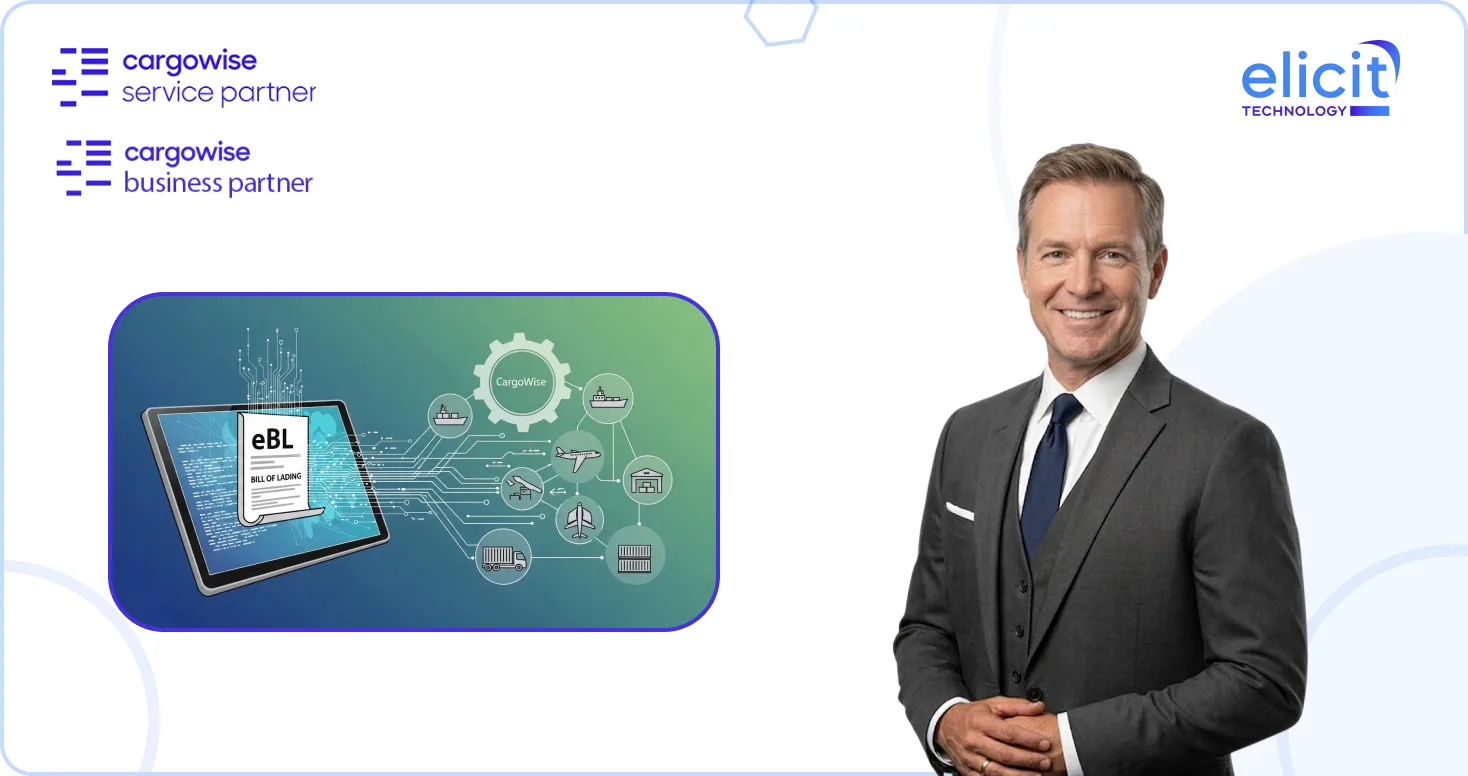
Now, the industry is shifting. Electronic Bills of Lading (eBL) are no longer just an innovation, they’re becoming a standard. And with CargoWise integrating eBL capabilities directly into its platform, freight forwarders finally have a practical way to move toward fully digital, paperless trade.
What is an Electronic Bill of Lading (eBL)?
An Electronic Bill of Lading (eBL) is a digital, paperless version of the traditional Bill of Lading. It carries the same legal and operational value but is created, managed, and transferred electronically instead of physically.
Within CargoWise, eBLs can be:
- Received directly through integrated providers
- Viewed and managed inside shipment workflows
- Transacted securely between parties
- Tracked throughout the document lifecycle
This means forwarders no longer need to rely on printing, couriering, or physically exchanging documents. Everything happens digitally, within a secure environment.
The Real Problem with Paper-Based Bills of Lading
Traditional Bills of Lading are slow, expensive, and risky. They require physical handling at multiple stages, printing, signing, courier delivery, and manual verification.
This creates operational challenges such as:
- Delays when documents arrive after the cargo
- High courier costs for international shipments
- Risk of loss or damage during transit
- Increased exposure to document fraud
- Manual errors during handling and processing
In many cases, containers sit at ports simply because the original document hasn’t arrived yet. That delay leads to demurrage charges, storage costs, and frustrated customers.
Why eBL is a Game-Changer for Logistics Operations?
Electronic Bills of Lading eliminate these challenges by digitizing the entire documentation process.
Instead of waiting days for paperwork, eBLs can be transferred across the world in minutes. This aligns documentation speed with cargo movement, which is exactly what modern logistics demands.
The key advantages include:
Speed: Instant document transfer instead of multi-day courier timelines
Efficiency: Reduced manual handling and administrative workload
Security: Encrypted, traceable transactions reduce fraud risk
Visibility: Real-time access to document status within the system
Sustainability: No paper, no courier emissions, reduced carbon footprint
This isn’t just about replacing paper, it’s about improving how logistics operations function.
How CargoWise Enables eBL Workflows?
One of the biggest barriers to digital transformation in logistics is system fragmentation. New tools often require separate platforms, additional training, and disconnected workflows.
CargoWise solves this by integrating eBL capabilities directly into its existing platform.
Through integrations with providers like Bolero, CargoWise allows users to:
- Publish electronic Bills of Lading
- Receive and manage eBLs within shipments
- Transact both master and house Bills of Lading digitally
- Maintain visibility across document workflows
This means logistics teams can handle eBL processes without leaving CargoWise, making adoption much smoother.
Integration with Bolero for Paperless Transactions
CargoWise integrates with trusted eBL providers such as Bolero to enable secure and compliant digital document exchange.
Through this integration, forwarders can:
- Manage Master Electronic Bills of Lading digitally
- Conduct secure document transfers between parties
- Maintain compliance with global trade standards
- Enable end-to-end paperless workflows
Bolero’s platform ensures that document ownership, transfer, and validation are handled securely, reducing the risks associated with paper-based documentation.
Smart Provider Selection in Shipping Instructions
CargoWise also simplifies eBL adoption through intelligent configuration.
The system can automatically default the eBL provider on Shipping Instructions based on:
- Carrier messaging capabilities
- Shipper and agent preferences
- Predefined system configurations
This reduces manual setup and ensures that the correct provider is selected for each shipment.
It’s a small feature, but it makes a big difference in streamlining operations and avoiding configuration errors.
What Happens When eBL is Not Supported?
Not all trading partners are fully ready for eBL adoption yet. CargoWise addresses this challenge by supporting flexible workflows.
When a counterparty does not support eBL:
- The system can convert the electronic Bill of Lading into a paper version
- Hybrid workflows can be used (combining electronic and paper processes)
- Transactions can continue without disrupting shipment operations
This flexibility ensures that forwarders can adopt eBL gradually without impacting ongoing business.
End-to-End Visibility Across the Document Lifecycle
One of the biggest advantages of using eBL within CargoWise is visibility.
Forwarders can track the entire lifecycle of the document:
- Creation and publishing
- Transfer between parties
- Ownership changes
- Final release and completion
This level of transparency is difficult to achieve with paper-based processes. It allows logistics teams to stay informed and take action quickly when needed.
Onboarding and Getting Started with eBL in CargoWise
CargoWise supports onboarding workflows to help organizations adopt eBL effectively.
This includes:
- Registration processes such as Bolero TRI onboarding
- Setting up provider preferences
- Configuring Shipping Instructions
- Training teams on digital document workflows
Once onboarded, organizations can start using eBL for both master and house Bills of Lading, improving efficiency across their operations.
Why eBL Adoption is No Longer Optional?
The logistics industry is moving toward a fully digital future. Governments, carriers, and global trade organizations are all pushing for paperless documentation.
Forwarders who adopt eBL early will benefit from:
- Faster shipment processing
- Reduced operational costs
- Improved customer experience
- Stronger compliance and security
- Better alignment with sustainability goals
Those who continue relying solely on paper risk falling behind as the industry evolves.
Preparing Your CargoWise System for eBL
While CargoWise provides the capability to support eBL, proper configuration is essential to fully utilize it.
Organizations need to align their system with digital workflows, including:
- Document delivery configuration
- Event and milestone tracking for documentation stages
- Workflow automation for document handling
- Integration setup with eBL providers
Without proper configuration, the benefits of eBL may not be fully realized.
Conclusion
Electronic Bills of Lading are transforming global trade documentation. They bring speed, security, and efficiency into a process that has remained unchanged for decades.
At Elicit, we help CargoWise users implement and optimize eBL workflows by configuring systems to support digital documentation, automation, and smooth integration.
From onboarding with providers like Bolero to setting up document workflows and system configurations, our team ensures your CargoWise environment is ready for the future of trade.
If you’re ready to reduce delays, eliminate paperwork, and move toward a smarter, paperless logistics operation, connect with Elicit, your trusted CargoWise service partner, and start your eBL journey today.