








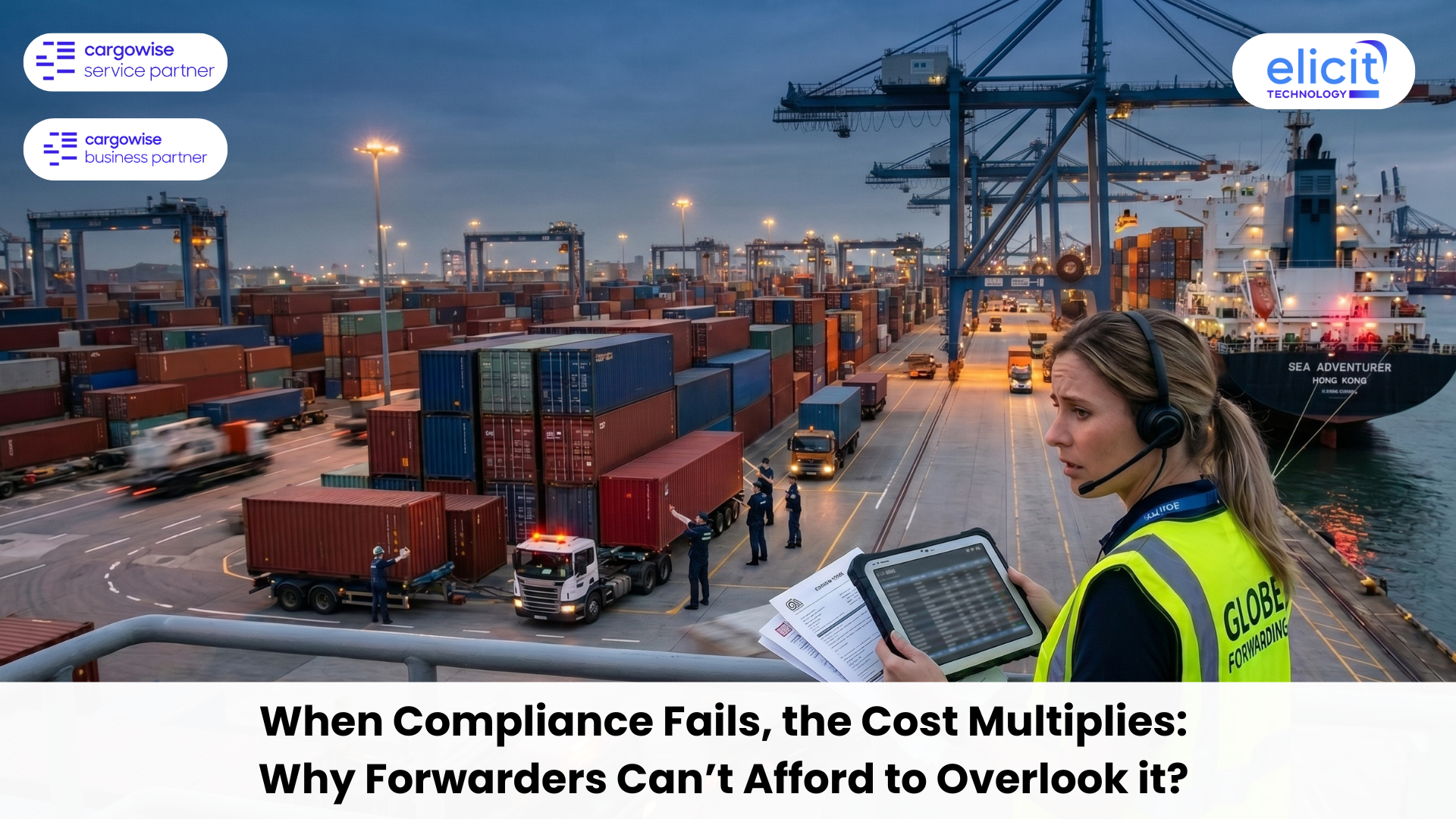
For years, many freight forwarders believed compliance sat elsewhere, with exporters, manufacturers, or customers.
That assumption no longer holds.
Across major markets like the U.S., Europe, and Asia-Pacific, regulators have made it clear: logistics providers are responsible for their own compliance decisions. It’s not just about moving cargo anymore, it’s about understanding what you’re moving, who you’re working with, and where it’s going.
And the stakes? Higher than ever.
📊 A Shift in Accountability Across Global Trade
Recent enforcement trends show a clear pattern. Authorities are no longer treating forwarders as passive participants, they are seen as active gatekeepers in global trade.
Guidelines like the “Know Your Cargo” directive issued by multiple U.S. agencies reinforce this expectation. Forwarders are now required to:
- Identify potential red flags in shipments
- Question unclear or suspicious data
- Refuse shipments that do not meet compliance standards
This shift means compliance is no longer a background function. It is part of daily operations.
⚠️ Why Even Small Mistakes can Lead to Big Consequences?
One of the biggest challenges in export compliance is the concept of strict liability.
In simple terms, intent doesn’t matter.
Whether a mistake is accidental or deliberate, the outcome is the same if systems fail. A missed screening alert, an incomplete classification, or an overlooked detail can lead to serious consequences.
Real-world cases have shown:
- Screening tools are missing restricted parties due to incomplete data
- Alerts are being overridden without proper escalation
- Shipments proceeding despite flagged risks
In each case, the issue was not intent, it was a system weakness.
💸 The True Cost Goes Beyond Financial Penalties
When compliance fails, the financial penalty is only part of the story.
The real impact often includes:
- Extended investigations lasting months or years
- Legal and administrative costs that exceed the original fine
- Operational disruption as teams focus on audits and reporting
- Reputational damage that remains publicly visible
More importantly, violations are often counted per transaction. A repeated issue across multiple shipments doesn’t result in a single penalty, it can multiply into hundreds.
In extreme cases, businesses may face denial orders, effectively restricting them from operating across certain jurisdictions.
🚛 Why Forwarders Remain Exposed?
Even when forwarders do not manufacture or export goods directly, they are still part of the compliance chain.
When issues arise, authorities look at documentation, declarations, and shipment handling. If a forwarder has been involved in preparing or processing that information, they may be held accountable.
The challenge is that forwarders often rely on customer-provided data, and that data may not always be accurate.
A product described as “industrial components” could fall under standard goods or controlled dual-use items. Without proper validation, the risk sits with the forwarder.
📈 Compliance is Becoming a System Challenge
As shipment volumes grow and regulations evolve, compliance is no longer manageable through manual processes alone.
Teams are expected to:
- Screen multiple parties across global databases
- Classify goods against the changing control lists
- Track regulatory requirements across jurisdictions
- Maintain detailed audit trails for every decision
Delivering this level of consistency at scale is extremely difficult without the right systems in place.
This is why the industry is moving toward integrated, intelligence-driven solutions like ComplianceWise, designed to support real-time screening and decision-making.
🤝 Why having the Right Setup Matters More than Ever?
Here’s the reality, compliance is not just about having tools. It’s about how those tools are configured, aligned, and used within your operations.
Without the right setup:
- Risks may go unnoticed
- Alerts may not be handled correctly
- Documentation may lack consistency
- Audit readiness may be compromised
The difference between exposure and control often comes down to how well your system supports your processes.
🌍 Moving from Reactive Compliance to Proactive Control
Forwarders today cannot afford to wait for issues to surface.
The focus is shifting toward:
- Identifying risks earlier in the workflow
- Ensuring consistency across decisions
- Maintaining clear documentation for every action
- Building systems that support compliance at scale
This proactive approach not only reduces risk but also strengthens operational confidence.
📌 The Key Takeaway
Compliance is no longer someone else’s responsibility, it is a shared and critical function across the supply chain.
The cost of getting it wrong goes far beyond fines. It impacts operations, reputation, and long-term business continuity.
In today’s environment, success depends on having the right systems and the right expertise in place before issues arise.
🤝 Strengthen Your Compliance Strategy with Expert Support
Elicit Technology helps logistics providers build stronger, more reliable compliance workflows within CargoWise, ensuring your operations are accurate, audit-ready, and aligned with global regulations.