



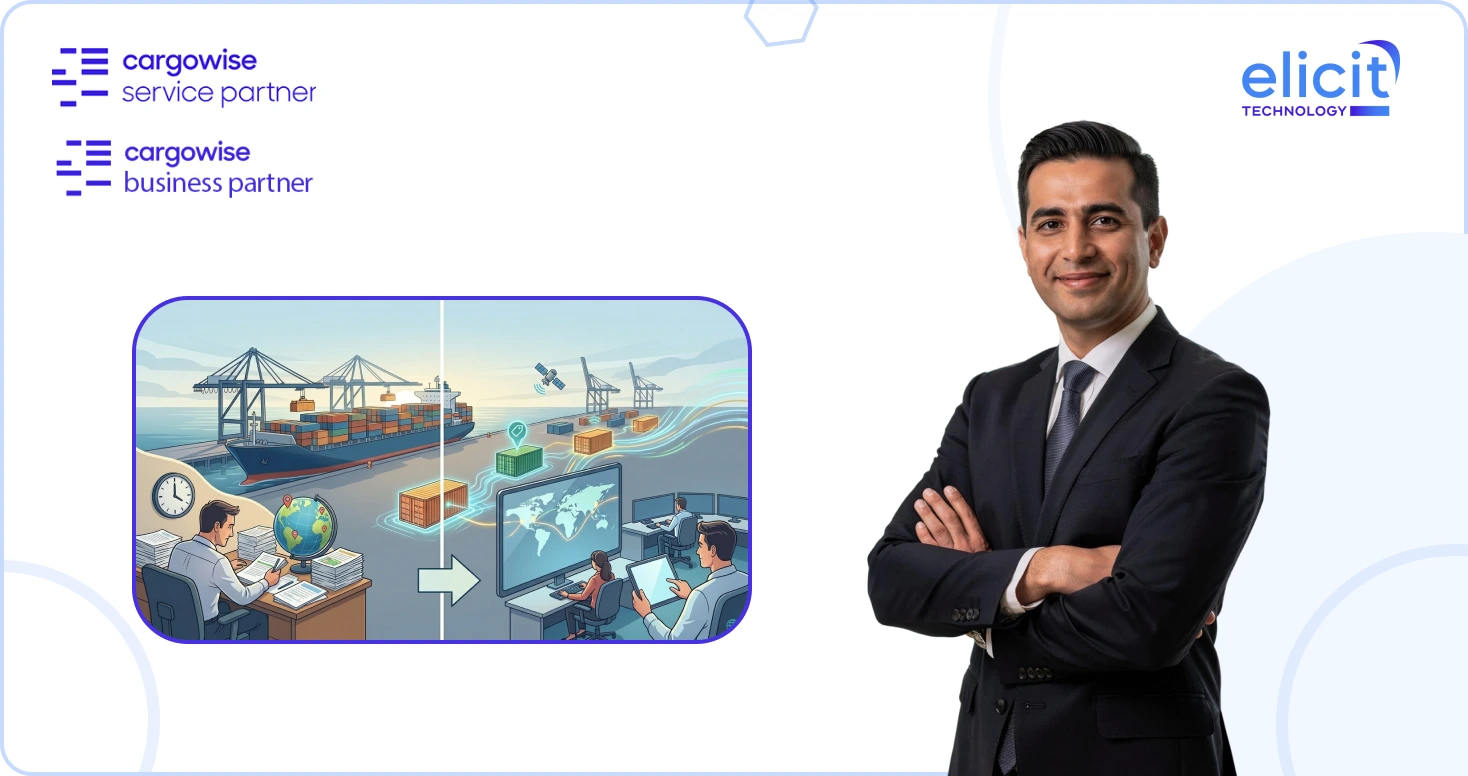
Every ocean shipment has a story.
The container leaves the factory. It moves by truck or rail. It reaches the terminal. It gets loaded onto a vessel. The vessel departs, transships, arrives, unloads, moves inland, and eventually reaches the customer.
Simple on paper.
Messy in real life.
For freight forwarders, the hardest part is not always moving the container. It is knowing exactly what is happening to it, when it is happening, whether it is on time, and who needs to be informed before a small delay becomes a bigger service issue.
That is why CargoWise Container Automation has become an important capability for ocean freight visibility. It helps logistics teams move away from manual tracking, disconnected carrier websites, outdated spreadsheets, and delayed status updates. Instead, container movement data flows into CargoWise, where teams can monitor shipments, trigger workflows, manage exceptions, and keep customers informed from booking to de-hire.
Why Ocean Freight Visibility is Still a Daily Challenge?
Ocean freight involves multiple moving parts. A single container can pass through carriers, terminals, truckers, rail providers, customs brokers, destination agents, warehouses, and customers. Every party may hold a different piece of the visibility puzzle.
Without connected tracking, teams often spend time checking external websites, calling service providers, refreshing carrier portals, reading email updates, and manually updating customers. This creates a lot of duplicated effort.
The bigger problem is data quality. Tracking updates may be delayed, incomplete, duplicated, or inconsistent across sources. When teams rely on disconnected systems, it becomes difficult to know which update is correct and what action should be taken next.
CargoWise positions Container Automation as a way to achieve total ocean freight visibility with end-to-end container tracking from a single platform. It supports data automation, reduces the likelihood of user error, eliminates reliance on conflicting external information, and helps teams act faster with automated ETA alerts, status updates, and exception management.
What is CargoWise Container Automation?
CargoWise Container Automation is designed to bring ocean freight tracking data directly into the CargoWise workflow. Instead of operators manually searching for updates, container events, and statuses are made available within the system.
This gives freight forwarders a more connected way to monitor ocean shipments and manage exceptions. Key container events can include actual inland and onboard movements, pre-advices, delays, changes to estimates, and milestone updates with date, time, and location information.
In practical terms, Container Automation helps your team answer questions like:
- Where is the container now?
- Has the vessel departed or arrived?
- Has the container gated in or gated out?
- Has cargo become available?
- Has the ETA changed?
- Which shipments need attention?
- Who should be notified?
That is where the value becomes real.
Why Manual Container Tracking Costs More than You Think?
Manual tracking may look harmless when shipment volumes are low. But as your ocean freight activity grows, tracking quickly becomes a major operational burden.
Operators may spend hours every week checking carrier websites, downloading updates, entering milestones, sending customer emails, and following up on missing data. This work does not directly create revenue, but it consumes valuable team capacity.
Manual tracking also increases the risk of errors. A missed ETA change, delayed port update, or wrong milestone entry can affect customer communication, delivery planning, customs coordination, and warehouse readiness.
With CargoWise Container Automation, which eliminates manual tracking, operators can spend less time searching for information and more time managing the shipments that actually need attention. CargoWise highlights this shift clearly: automated workflows help operators spend less time on error-prone manual processes and more time unlocking the value of end-to-end visibility from booking to de-hire.
End-to-End Visibility from Booking to De-Hire
A strong ocean visibility process does not stop at vessel departure. True visibility follows the container across the full movement cycle.
CargoWise Container Automation supports visibility across ocean and inland movements, including land-based tracking with road and rail alerts and events. This is especially valuable because many delays happen outside the vessel journey, such as inland pickup, terminal gate-in, cargo availability, rail movement, delivery, or de-hire.
This gives teams a more complete picture of the shipment lifecycle. Instead of tracking only the vessel, they can monitor the container as it moves through the entire supply chain.
For freight forwarders, that means fewer blind spots and better control over customer communication.
Automated Workflows that Turn Visibility into Action
Visibility alone is not enough. Knowing a shipment is delayed only creates value if your team can act on it quickly.
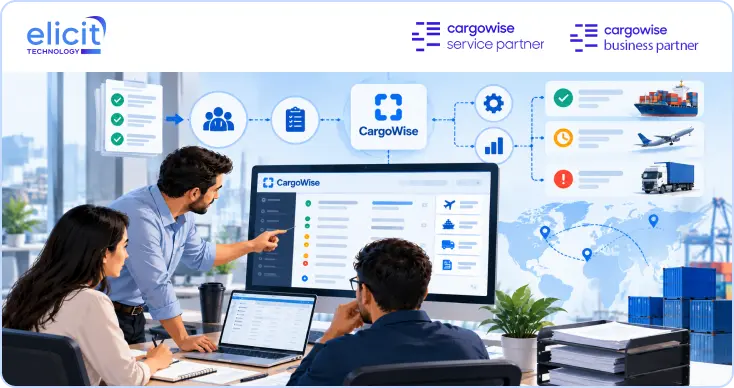
That is why automated workflows are a key part of CargoWise Container Automation. Visibility data can trigger tasks, milestones, alerts, exceptions, and notifications inside the workflow. CargoWise explains that key visibility data points can be automatically shared with parties across the supply chain while also helping teams measure performance against internal timelines.
This means teams can build workflows that support:
- Customer milestone updates
- Internal exception alerts
- ETA change notifications
- Carrier delay monitoring
- Customs broker coordination
- Warehouse readiness updates
- Transport provider notifications
- Agent and customer communication
Instead of waiting for someone to notice a change manually, the system helps bring the issue to the right person at the right time.
Comprehensive Shipment Monitoring
CargoWise Container Automation gives users access to key container movement events and statuses with date, time, and location information. This includes actual inland and onboard movements, pre-advices, delays, and changes to estimates.
This level of monitoring helps teams manage shipments with more confidence. Operations can see whether milestones are progressing as expected. Customer service can respond with accurate updates. Management can measure performance more clearly. Exception teams can prioritize the containers that need intervention.
The result is not just better tracking.
It is a better execution.
Automated Exception Management
Ocean freight rarely moves exactly as planned. Vessels can be delayed, transshipment windows can change, ports can become congested, and inland movements can shift.
The problem is that exceptions are often discovered too late when tracking is manual.
CargoWise Container Automation allows container lifecycle events to trigger automatic alerts, exceptions, and processes. These workflows can complete actions automatically or bring issues to operators when intervention is required.
This helps teams move from reactive tracking to proactive exception management.
Instead of asking, “What happened?” teams can ask, “What needs action now?”
Better Collaboration Across the Supply Chain
Container visibility becomes more powerful when it is shared with the right people.
CargoWise enables workflow triggers that can alert staff, agents, customs brokers, inland service providers, and customers about actual or estimated container movements.
This reduces the manual communication burden on operators. It also improves transparency because stakeholders receive relevant updates without waiting for someone to prepare an email manually.
For customers, this creates a better experience. They feel informed, prepared, and confident because updates arrive before they need to ask.
One Platform for TMS and Visibility
One of the strongest advantages of CargoWise Container Automation is that visibility data is embedded into the CargoWise platform.
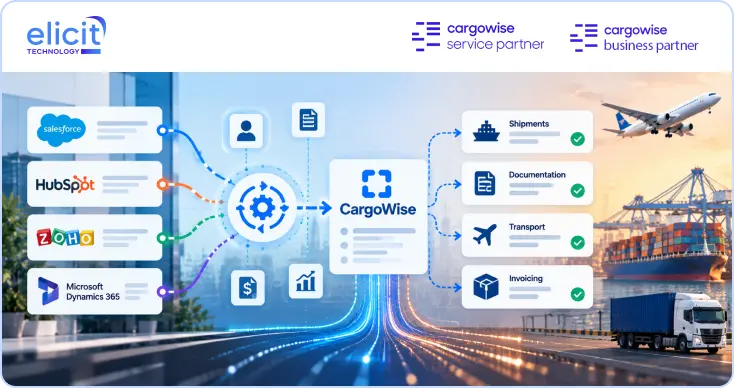
CargoWise describes this as having your TMS and visibility platform all in one. From initial quote to final invoice, users can manage bookings, shipments, rates, customs, invoices, schedules, tracking, and automation from one platform.
This matters because many logistics companies still use multiple tools for operations and tracking. They may manage shipments in CargoWise but use separate visibility platforms, carrier portals, spreadsheets, and customer update tools.
That creates duplication.
When visibility is built into the operational system, teams can work from one connected source of information.
Total Vessel Visibility with Route Visualizer
CargoWise Container Automation also supports vessel visibility through Route Visualizer. This allows teams to see where a vessel is after the journey begins, where it is heading, and whether it is on time. CargoWise also mentions color-based visual alerts for departure and arrival delays, giving users actionable insights into shipments as they move port to port.
For ocean freight teams, this is extremely useful because vessel-level visibility helps them anticipate downstream impacts.
If a vessel is delayed, the team can prepare customers, update delivery plans, adjust warehouse expectations, and review inland transport arrangements.
Why CargoWise Users Still Need Expert Setup and Optimization?
CargoWise Container Automation is powerful, but the business value depends on how well it is configured and adopted.
Many CargoWise users have access to valuable functionality, but still do not use it properly because workflows, milestones, alerts, event logic, customer communication rules, and reporting structures were never optimized.
A CargoWise service partner can help businesses review how container automation should fit into their actual operations. That includes:
- Mapping container events to workflows
- Configuring milestone triggers
- Setting up exception alerts
- Improving customer notification flows
- Aligning visibility with operations and transport teams
- Reviewing reporting and dashboard needs
- Reducing manual tracking processes
- Training teams to use visibility data effectively
This is important because automation is not just about switching on tracking. It is about designing the right operational response around the data.
How Elicit Helps CargoWise Users Unlock Container Automation?
Elicit helps logistics companies make better use of CargoWise Container Automation by aligning system capability with real operational workflows.
As a trusted CargoWise service partner, Elicit supports implementation, configuration, customization, workflow optimization, reporting, automation, API/EDI integration, and ongoing CargoWise support.
For container automation, Elicit can help teams reduce manual tracking, improve milestone visibility, configure automated alerts, streamline customer updates, and build workflows that turn container events into action.
The goal is simple: help your team spend less time chasing updates and more time managing exceptions, improving service, and scaling operations.
Conclusion
CargoWise Container Automation helps freight forwarders achieve stronger ocean freight visibility by bringing container tracking, shipment events, ETA updates, exception alerts, vessel visibility, and workflow automation into one connected platform.
It reduces manual tracking, improves data accuracy, supports proactive exception management, and helps teams collaborate more effectively across the supply chain.
But to get the full benefit, CargoWise users need more than access to the feature. They need the right setup, workflow design, configuration, and operational guidance.
That is where an experienced CargoWise service partner makes the difference.
Book a call with the right implementation and optimization partner for CargoWise Container Automation, who can help your logistics business move from manual tracking to true end-to-end visibility.