








A customs declaration gets delayed because invoice data was entered incorrectly. Operations teams spend hours creating shipments from booking confirmations. Finance teams manually reconcile supplier invoices against accruals. Customer service teams chase updates that already exist somewhere in the system.
The frustrating part is that these problems are rarely caused by a lack of technology.
They are caused by documents.
Commercial invoices, Bills of Lading, Certificates of Origin, customs declarations, supplier invoices, packing lists, and supporting trade documents contain the information required to execute a shipment. Yet in many logistics organizations, that information is still manually extracted, reviewed, re-entered, validated, and reconciled multiple times across different departments.
Today, document intelligence is changing that.
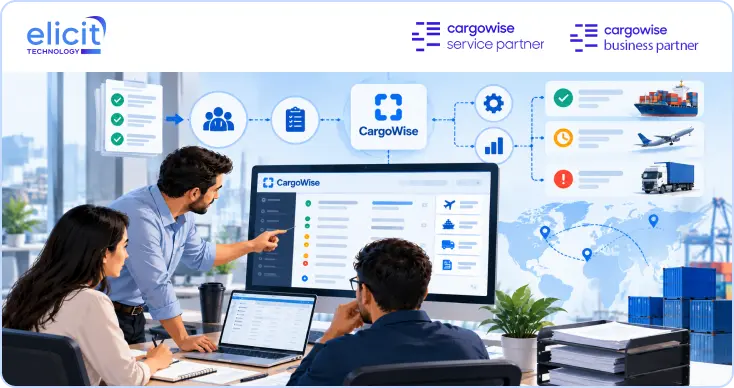
Rather than treating documents as files that need to be read by humans, modern logistics organizations are turning them into structured operational data that can move automatically through CargoWise workflows.
The result is faster execution, fewer errors, stronger compliance, and significantly less manual work.
Why has documentation become the Center of Logistics Operations?
Most people think logistics is about transportation.
In reality, cargo only moves when documentation moves correctly.
Every shipment depends on documentation to support:
- Shipment execution
- Customs clearance
- Cargo release
- Financial processing
- Compliance screening
- Customer visibility
- Regulatory reporting
The challenge is that the same information often gets handled repeatedly throughout the shipment lifecycle.
A commercial invoice may be reviewed by operations, customs, compliance, and finance. Each team may extract or validate the same information independently.
As shipment volumes increase, this creates:
- More manual effort
- More opportunities for errors
- More operational delays
- More reconciliation work
- Higher costs
This is why documentation has become one of the largest operational bottlenecks in modern freight forwarding.
What is Document Intelligence?
AI-powered Document intelligence is the process of converting unstructured documents into structured operational data that systems can understand and use automatically.
Instead of simply extracting text from a document, document intelligence understands:
- What the document represents
- How different data fields relate to each other
- Which shipment does the document belong to
- Whether information is complete and accurate
- Whether human review is actually required
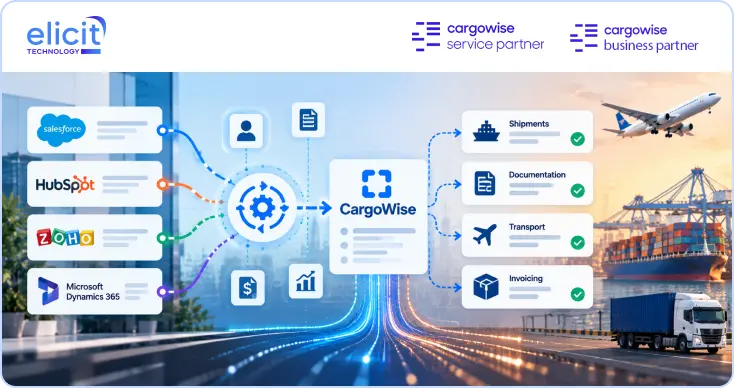
Once structured, the data can be reused throughout CargoWise without repeated entry.
This fundamentally changes how logistics teams work.
Instead of spending time entering data, they focus on managing exceptions, solving problems, and serving customers.
1. Transform Commercial Invoices into Operational Intelligence
Commercial invoices sit at the center of international trade.
They contain information required for:
- Customs declarations
- Duty calculations
- Compliance screening
- Financial reporting
- Customer billing
Yet many organizations still process commercial invoices manually.
Operations teams enter shipment details.
Customs teams enter the same information again.
Finance teams use the same document for billing and reporting.
The result is duplicated effort across multiple departments.
With document intelligence, invoice data is captured once and converted into structured information that can be applied throughout the CargoWise workflow.
Benefits of Commercial Invoice Intelligence
- Reduced manual data entry
- Faster customs preparation
- Improved billing accuracy
- Better compliance visibility
- Lower audit risk
Instead of becoming another PDF stored in a folder, the commercial invoice becomes a reusable operational record.
2. Use Electronic Bills of Lading to Improve Shipment Execution
Bills of Lading remain one of the most important documents in global logistics.
Traditionally, physical Bills of Lading create delays because they rely on:
- Courier services
- Manual document transfers
- Physical document handling
- Paper-based cargo release processes
Document intelligence supports the transition toward Electronic Bills of Lading (eBLs).
Rather than managing physical paperwork, freight forwarders can work with structured digital records that remain connected to the shipment lifecycle.
Benefits of Electronic Bills of Lading
- Faster document exchange
- Reduced courier dependency
- Improved shipment visibility
- Faster cargo release
- Better document security
As more carriers adopt digital trade documentation, Electronic Bills of Lading are becoming a critical part of modern logistics operations.
3. Automate Certificates of Origin Within CargoWise
Certificates of Origin remain essential for international trade compliance and preferential trade agreements.
However, many organizations still manage them through manual processes involving:
- Data re-entry
- External submissions
- Document preparation
- Approval workflows
Document intelligence allows shipment and product information to be captured once and reused when generating Certificates of Origin.
Instead of recreating information that already exists within CargoWise, businesses can automate much of the process.
Benefits of Origin Document Automation
- Faster document generation
- Reduced manual processing
- Better data consistency
- Improved compliance
- Faster turnaround times
This allows trade documentation to move at the same pace as the shipment itself.
4. Improve Customs Declarations with Structured Data
Customs declarations are only as accurate as the information used to create them.
Many customs teams spend significant time rebuilding information from:
- Commercial invoices
- Packing lists
- Booking documents
- Shipment records
This creates unnecessary delays and increases the risk of errors.
Document intelligence changes the process by making structured shipment and commercial data available directly within customs workflows.
Instead of entering data again at the filing stage, customs teams can work from information already validated earlier in the process.
Benefits of Customs Document Intelligence
- Faster customs filing
- Reduced manual entry
- Better declaration accuracy
- Lower compliance risk
- Improved audit readiness
As customs regulations continue to evolve globally, accurate structured data becomes increasingly important.
5. Connect Finance and Operations Through Supplier Invoice Automation
One of the biggest challenges inside many freight forwarding organizations is the disconnect between operations and finance.
Supplier invoices often require:
- Invoice matching
- Job validation
- Cost verification
- Reconciliation
- Approval processing
In traditional environments, finance and operations review the same information separately.
This creates delays, disputes, and additional workload.
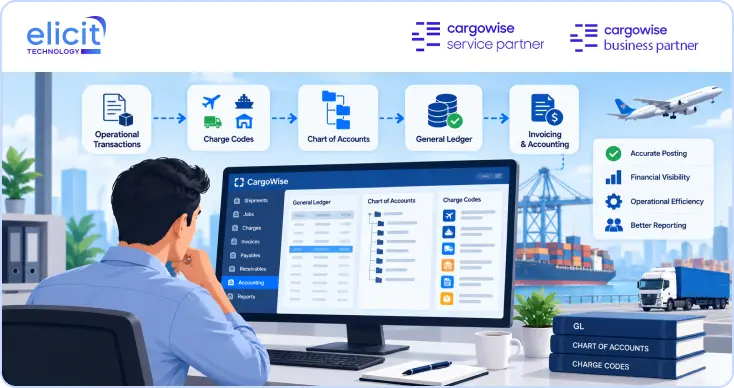
Document intelligence creates a shared workflow where invoice information is captured once and validated against the job automatically.
Benefits of Supplier Invoice Automation
- Automated invoice matching
- Earlier discrepancy detection
- Reduced reconciliation effort
- Faster approval cycles
- Improved financial control
Instead of spending time reviewing every invoice, teams can focus on true exceptions.
The Real Goal: One Flow of Data Across the Business
The biggest benefit of document intelligence is not faster document processing.
It is eliminating rework.
Many freight forwarders still operate in environments where:
- Data is entered multiple times
- Teams validate the same information repeatedly
- Errors are discovered late
- Documents and systems become disconnected
Document intelligence creates a different operating model.
Data enters once.
It is validated in context.
It flows automatically across:
- Operations
- Customs
- Compliance
- Finance
- Customer visibility
- Reporting
This creates a connected logistics ecosystem where information moves as efficiently as cargo.
How Elicit Technology Helps CargoWise Users Implement Document Intelligence?
At Elicit Technology, we help logistics companies transform manual document-driven processes into intelligent CargoWise workflows.
Our team works with freight forwarders, customs brokers, NVOCCs, and logistics providers to automate key operational processes, including:
Commercial Invoice Automation
Convert invoice data into structured operational records for customs, billing, compliance, and reporting.
Supplier Invoice Automation
Automate accounts payable processing, invoice matching, validation, and reconciliation workflows.
Customs Documentation Automation
Reduce manual filing effort and improve declaration accuracy through structured data workflows.
CargoWise Workflow Automation
Automate shipment creation, booking creation, console formation, document processing, and milestone updates.
AI-Powered Logistics Automation
Leverage AI-driven document processing to reduce manual effort and improve operational scalability.
Conclusion
The future of logistics is not about processing more documents.
It is about processing less paperwork and using more intelligence.
Freight forwarders that continue relying on manual document handling will face increasing challenges as shipment volumes, compliance requirements, and customer expectations continue to grow.
Document intelligence provides a better path forward.
By turning commercial invoices, Bills of Lading, Certificates of Origin, customs declarations, and supplier invoices into structured operational data, logistics organizations can reduce manual work, improve accuracy, strengthen compliance, and scale operations more efficiently.
For CargoWise users, the opportunity is even greater. When document intelligence is embedded directly into CargoWise workflows, data enters once and supports every stage of the shipment lifecycle.
That’s where Elicit Technology helps. As a leading CargoWise Business and Service Partner, we help logistics organizations implement practical automation solutions that turn documents into decisions and manual processes into intelligent logistics execution.