









Every warehouse reaches a point where manual processes start slowing everything down. Inventory becomes harder to track, receiving takes longer, picking errors increase, storage charges get missed, and customers expect real-time visibility that spreadsheets simply cannot provide.
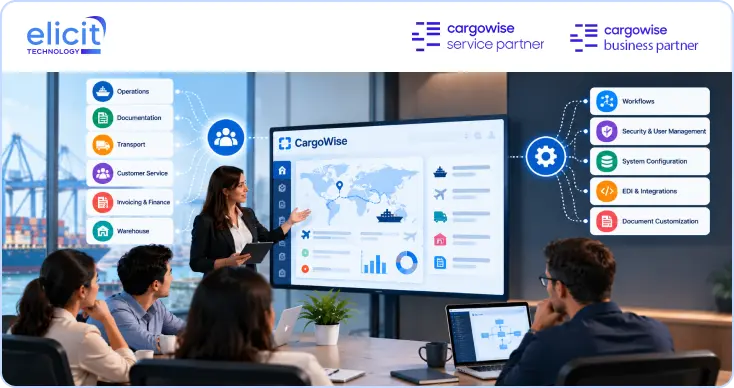
For freight forwarders, 3PL providers, warehouse operators, and logistics businesses already using CargoWise, this is where the CargoWise Warehouse Module becomes highly valuable. It is not just a basic warehouse tool. It is a connected warehouse management solution that helps bring warehousing, forwarding, transport, customs, inventory, billing, reporting, and customer visibility into one operational ecosystem.
In today’s logistics environment, warehouse operations cannot work in isolation. Customers want faster updates, accurate stock visibility, seamless order processing, and clear billing. Operations teams need better control. Finance teams need accurate charges. Management needs reliable reporting. The CargoWise Warehouse Optimization helps support all of this when it is implemented and optimized correctly.
What is the CargoWise Warehouse Module?
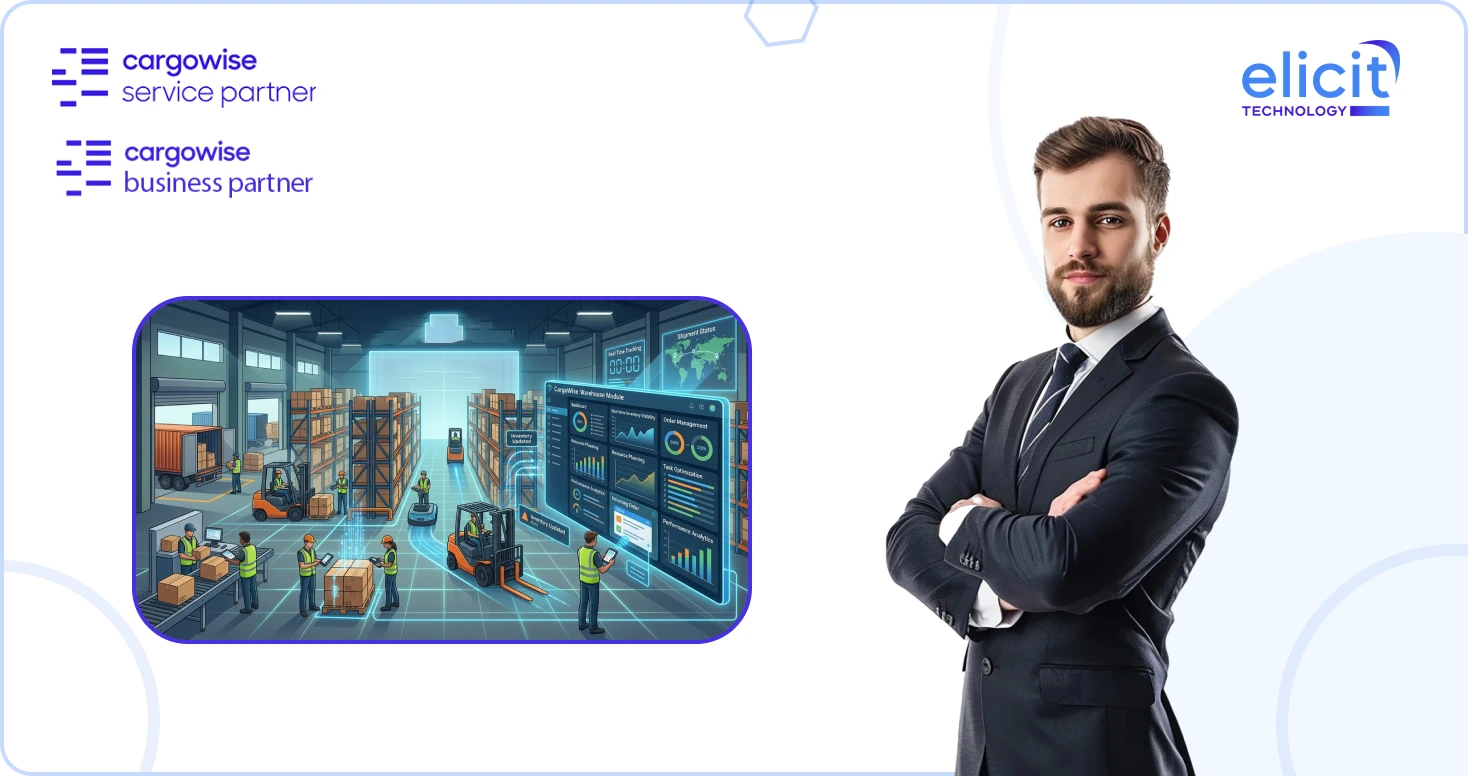
The CargoWise Warehouse Module is designed to help logistics companies manage warehouse and distribution operations within CargoWise. It supports warehouse setup, inventory control, receiving, putaway, picking, packing, dispatch, storage billing, RF scanning, warehouse reporting, and customer-specific processes.
For freight forwarders and 3PL providers, the biggest advantage is that warehouse activity can connect with the wider logistics workflow. Instead of running warehouse operations in a separate system, teams can manage warehouse jobs alongside forwarding, transport, customs, accounting, and customer visibility.
This creates a stronger flow of information across the business. A shipment can move into the warehouse, inventory can be received, storage can be tracked, orders can be fulfilled, transport can be arranged, and charges can flow into accounting without unnecessary duplicate entry.
Why Modern Warehouses Need More than Inventory Tracking?
Warehouse operations today are much more complex than simply knowing what stock is available. Businesses now manage multiple customers, more SKUs, mixed cargo types, high-volume orders, tighter delivery windows, and growing customer expectations.
Manual processes often create problems such as inaccurate stock counts, delayed receiving, picking mistakes, missed storage charges, poor space utilization, and slow customer updates. When warehouse data sits outside the main logistics system, these problems become even harder to control.
The CargoWise Warehouse Module helps logistics companies improve warehouse accuracy and visibility by keeping operational data connected. This means teams can manage inventory, movements, charges, and customer requirements with greater control.
Different Warehouse Types in CargoWise
CargoWise allows users to create different warehouse types based on operational needs. This is important because not every warehouse works the same way.
A Product Warehouse is commonly used for 3PL warehouse operations where products are received, stored, picked, packed, and dispatched. A Transit Warehouse supports temporary cargo movement and handling. A Foreign Trade Zone or bonded-style warehouse setup may support controlled cargo activities depending on regulatory and business requirements. A Container Yard can support container-based storage and handling activities.
The right warehouse type matters because it affects how areas, products, locations, inventory, and workflows are managed inside CargoWise. Poor setup at this stage can create long-term operational issues, so configuration should be planned carefully.
Warehouse Areas and Location Control
After creating a warehouse, businesses need to define warehouse areas. These areas represent physical or operational zones inside the facility.
Common warehouse areas may include dock doors, storage areas, bonded areas, free store areas, excise areas, packing zones, and dispatch locations. These areas help teams organize where goods are received, stored, picked, packed, or moved.
Location control is one of the most important parts of warehouse efficiency. If warehouse areas and locations are not structured properly, staff may spend unnecessary time searching for products, moving goods inefficiently, or correcting stock issues.
With proper setup, CargoWise can help improve space usage, product visibility, and warehouse movement control.
Inventory Visibility and Product Control
The CargoWise Product Warehouse functionality supports detailed inventory tracking. This can include product codes, quantities, serial numbers, batch or lot details, expiry dates, dimensions, customer ownership, and other product attributes.
This level of visibility is extremely useful for 3PL operations because customers often expect accurate stock information at any time. They want to know what is available, what has been received, what has been allocated, and what has been dispatched.
Better inventory visibility also helps internal teams reduce stock disputes, improve planning, and support faster customer communication.
Receiving and Putaway Efficiency
Receiving is one of the first critical steps in warehouse operations. If receiving is slow or inaccurate, the rest of the warehouse workflow is affected.
CargoWise Warehouse can help structure receiving processes by capturing product information, linking goods to warehouse jobs, assigning locations, and supporting putaway rules. Putaway rules help guide where goods should be stored based on product type, warehouse area, customer requirements, or operational logic.
For example, damaged goods may be directed to a specific area. Fast-moving stock may be placed closer to picking locations. Controlled products may require specific warehouse zones.
This improves consistency and reduces unnecessary handling.
Pick and Pack Automation
Picking and packing are among the most labor-intensive warehouse activities. Small errors in this stage can lead to wrong shipments, customer complaints, returns, and additional costs.
The CargoWise Warehouse Module supports features that help improve picking and packing productivity. This can include wave picking, simultaneous picking, UOM-based picking, location verification, packing control, and product movement logic.
Wave picking allows warehouse teams to group orders in a way that improves efficiency. Simultaneous picking helps multiple team members work through order activity faster. Location verification improves stock accuracy by ensuring the right product is picked from the right place.
CargoWise can also support ABC analysis, helping warehouses classify products based on movement patterns such as fast, medium, or slow-moving inventory. This helps teams plan product placement more intelligently.
RF Scanning and Warehouse Accuracy
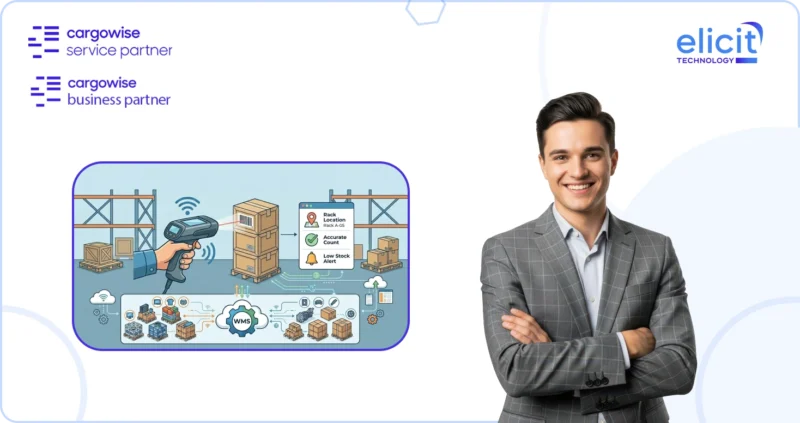
RF scanning is one of the most important tools for improving warehouse accuracy. It helps confirm that the right product, quantity, and location are being used during receiving, picking, packing, and dispatch.
Without scanning, warehouse teams rely heavily on manual checks. That increases the risk of mistakes, especially in high-volume environments.
RF scanning helps reduce manual entry, improve stock accuracy, and update warehouse activity closer to real time. For logistics companies managing multiple customers or large product volumes, RF-enabled workflows can significantly improve productivity.
Warehouse Billing and Accounting Integration
One of the strongest benefits of using the CargoWise Warehouse Module is the connection between warehouse operations and financial workflows.
Warehouse activities often generate charges such as receiving, storage, handling, picking, packing, dispatch, labeling, rework, and other customer-specific services. If these charges are not configured correctly, revenue can be missed.
CargoWise supports warehouse billing through customer contracts, charge rules, periodic invoicing, storage charges, handling fees, and operational billing logic. This helps finance teams reduce manual billing work and improve invoice accuracy.
For 3PL providers, this is a major advantage because warehouse profitability depends on accurate and consistent charge capture.
Customer Visibility and Better Service
Modern customers expect visibility. They want inventory updates, order status, stock movement details, and faster communication.
When warehouse operations are connected within CargoWise, customer information becomes easier to manage and share. Instead of manually preparing reports or sending repeated updates, teams can work from structured warehouse data.
Better visibility improves customer trust. It also reduces the pressure on customer service teams because information is easier to access and communicate.
How CargoWise Warehouse Connects with Other Modules?
The CargoWise Warehouse Module becomes even more powerful when connected with other CargoWise functions.
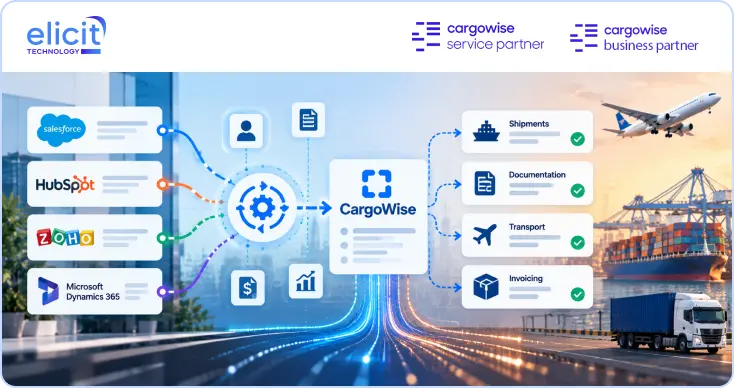
It can support stronger workflows across forwarding, customs, transport, accounting, customer portals, integrations, reporting, and document management. This is important because warehouse activity rarely stands alone.
For example, imported cargo may move from the forwarding agent into a warehouse receipt. Customs requirements may affect release. Transport may be needed for delivery. Charges need to flow into invoicing. Customer reporting may depend on inventory and dispatch activity.
When all of this works through CargoWise, the business gains better operational control and less duplicate work.
Common Mistakes Businesses Make with CargoWise Warehouse
Many companies do not get full value from the CargoWise Warehouse Module because the setup is incomplete or outdated.
Common mistakes include poor warehouse area design, limited RF scanner usage, manual billing processes, weak product setup, lack of putaway rules, no warehouse KPIs, limited reporting, poor integration with transport or forwarding workflows, and underused automation.
These issues do not mean CargoWise is not suitable. They usually mean the warehouse module needs proper configuration and optimization.
How to Get More Value from CargoWise Warehouse?
To get more value from the CargoWise Warehouse Module, businesses should regularly review how the system is being used.
This includes reviewing warehouse setup, areas, locations, product master data, billing rules, pick and pack workflows, RF scanning usage, reporting, customer visibility, and integration with other CargoWise modules.
Optimization should focus on reducing manual work, improving inventory accuracy, speeding up warehouse processes, and ensuring warehouse activity supports financial and operational goals.
How Elicit Helps with CargoWise Warehouse Module Implementation and Optimization?
As an official CargoWise Service and Business Partner, Elicit helps logistics companies implement, configure, and optimize the CargoWise Warehouse Module based on real operational needs.
Elicit supports CargoWise users with warehouse setup, Product Warehouse configuration, 3PL warehouse optimization, RF scanner workflows, warehouse billing and contract setup, API and EDI integration, reporting and dashboard customization, workflow automation, and ongoing support.
Our goal is not simply to activate the module. We help businesses build warehouse operations that are faster, more accurate, more visible, and ready to scale.
Conclusion
The CargoWise Warehouse Module is much more than a warehouse management system. When configured correctly, it becomes a connected operational hub that links inventory, forwarding, customs, transport, finance, reporting, and customer visibility.
For freight forwarders, 3PL providers, and warehouse operators, this creates a major opportunity to reduce manual work, improve inventory accuracy, strengthen billing, and deliver better customer service.
Many companies already have access to powerful CargoWise warehouse capabilities but are not using them fully. With the right implementation, automation, and optimization support, the CargoWise Warehouse Module can become a strong driver of productivity and profitability.
If your warehouse teams are still relying on manual processes, disconnected systems, or limited visibility, contact Elicit, we can help you unlock the full value of CargoWise Warehouse and build a smarter warehouse operation.