







Every shipment tells a story. But before cargo moves across oceans, borders, and warehouses, documents move first.
A typical international shipment can involve between 10 and 20 critical documents and more than 20 stakeholders, including freight forwarders, customs authorities, carriers, banks, suppliers, and customers. Industry research shows that as much as 75% of shipment-related document data is handled multiple times throughout a single logistics transaction.
That means the same information is often entered, checked, corrected, emailed, re-entered, and validated repeatedly across different teams and systems.
In this fast-moving logistics environment, that’s no longer just inefficient, it has become a business risk. The real question facing logistics companies today is simple:
How quickly can your organization turn documents into actionable data?
Why is Manual Documentation Becoming a Hindrance?
Global trade volumes continue to grow, while customers expect faster service, customs authorities demand more accurate submissions, and finance teams require cleaner data for billing and reconciliation.
Yet many logistics businesses still rely heavily on manual document processing.
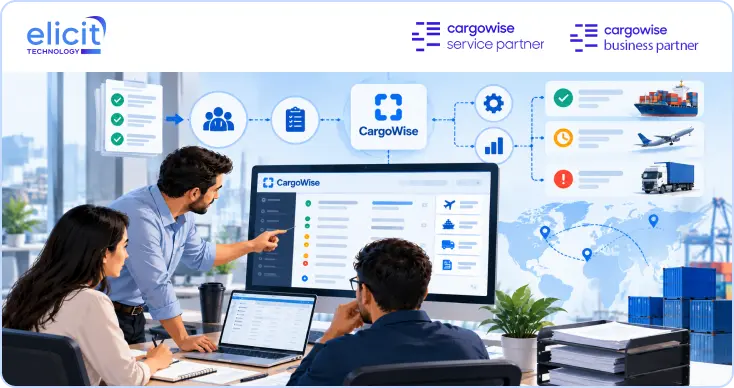
Commercial invoices, packing lists, bills of lading, certificates of origin, customs declarations, and supplier invoices continue to arrive as PDFs, emails, scanned files, and attachments. Teams spend valuable time reviewing documents, extracting information, and manually entering data into CargoWise and other systems.
The result is familiar across the industry:
- Delayed shipment processing
- Data entry mistakes
- Duplicate work across departments
- Compliance risks
- Slower invoicing cycles
- Increased operational costs
According to industry estimates, container shipping alone generates more than 1.26 billion freight invoices annually, while approximately 90% of invoices worldwide are still processed manually.
As shipment volumes increase, these inefficiencies multiply.
The Shift from Document Management to Document Intelligence
Across the logistics sector, a major transformation is underway.
Forward-thinking organizations are no longer asking how to store documents more efficiently. Instead, they are focusing on how to extract value from the information inside those documents.
This is where AI-powered document intelligence is changing the game.
Rather than treating documents as static files, modern digital documentation solutions interpret information in context, transform unstructured documents into structured data, and make that information immediately available across operational workflows.
The outcome is simple but powerful:
- Documents stop being paperwork.
- They become usable business data.
Commercial Invoices: One Document, Multiple Business Impacts
Among all logistics documents, commercial invoices carry some of the most valuable information.
They influence:
- Customs declarations
- Compliance screening
- Financial reporting
- Billing accuracy
- Audit readiness
- Shipment visibility
Traditionally, teams have needed to manually extract invoice information and enter it into multiple systems.
With CargoWise’s evolving digital documentation capabilities, commercial invoice data can now be transformed into structured operational information that supports customs, compliance, finance, and reporting activities from a single source of truth.
This creates a more connected workflow where operational teams spend less time handling paperwork and more time managing exceptions, customers, and shipments.
Why is Compliance Becoming a Documentation Challenge?
The regulatory environment continues to become more demanding.
Governments are requesting earlier data submissions, customs authorities are increasing scrutiny, and compliance obligations continue to expand across international trade.
The challenge is that compliance decisions are only as good as the data being reviewed.
When shipment information is incomplete, manually entered, or spread across multiple documents, compliance teams face greater exposure.
Modern document intelligence solutions help organizations work with complete, structured shipment information, creating stronger visibility and more confidence when managing customs and compliance requirements.
In a world where regulatory expectations are rising every year, accurate documentation is no longer just an operational task, it is a must.
Finance and Operations Need the Same Data
One of the biggest challenges in logistics businesses is the disconnect between operations and finance.
Operations teams focus on moving freight.
Finance teams focus on costs, invoices, and profitability.
When both departments work from different information sources, reconciliation becomes a daily struggle.
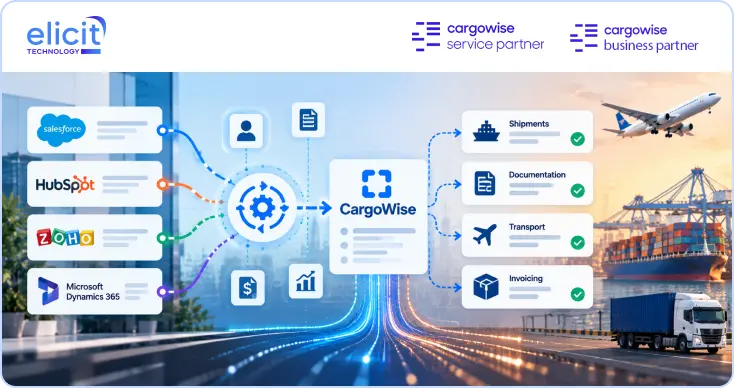
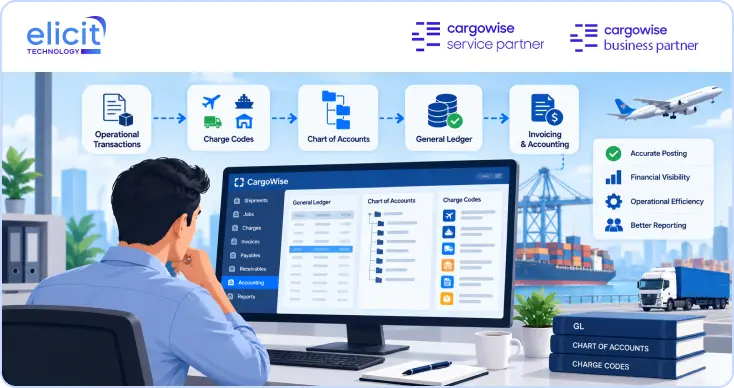
The latest digital documentation initiatives within CargoWise are helping bridge that gap by connecting operational and financial workflows around the same structured shipment data.
This means fewer disputes, faster invoice processing, improved cash flow visibility, and better decision-making across the organization.
The Future of Logistics Runs on Data, Not Documents
The logistics industry has spent decades digitizing processes.
The next phase is digitizing understanding.
The companies that will thrive over the next decade are not necessarily those handling the most shipments. They will be the organizations that can transform information into action faster than their competitors.
Digital documentation is becoming the foundation for:
- Faster customs processing
- Better compliance management
- Improved customer experiences
- More accurate financial operations
- Enhanced visibility across supply chains
- Scalable business growth
As AI continues to mature, the conversation is shifting from document storage to document intelligence, and that shift is happening now.
Why the Right CargoWise Service Partner Matters?
Technology alone does not deliver results.
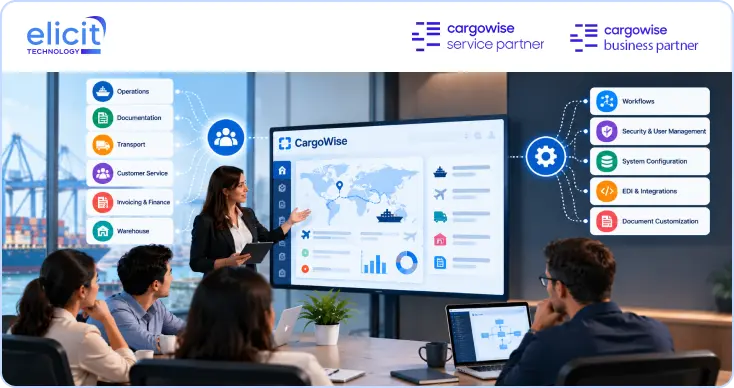
The real value comes from understanding how digital documentation, AI-driven workflows, compliance processes, finance operations, and CargoWise functionality work together within your business.
That is where experience matters.
Whether you’re looking to streamline commercial invoice processing, improve compliance readiness, enhance operational efficiency, or unlock the full potential of CargoWise digital documentation capabilities, having the right implementation strategy is critical.
Conclusion
Digital transformation in logistics is no longer a future initiative, it is a present-day necessity.
Elicit helps logistics providers, freight forwarders, customs brokers, and supply chain organizations maximize their CargoWise investment through implementation, optimization, integration, automation, consulting, and support services. If you’re ready to reduce manual document handling, improve operational efficiency, build a smarter digital logistics operation, and discover what’s possible with the leading CargoWise Service Partner by your side.