











Preparing logistics teams for the next phase of sustainability and compliance
Sustainability is no longer a future goal in logistics, it is a current requirement. Regulators, customers, and investors are all asking the same question: How are you managing your emissions?
Across global supply chains, businesses are being pushed to move beyond reporting and into action. Those who understand the requirements early and build the right capabilities will be better positioned to stay compliant, competitive, and trusted.
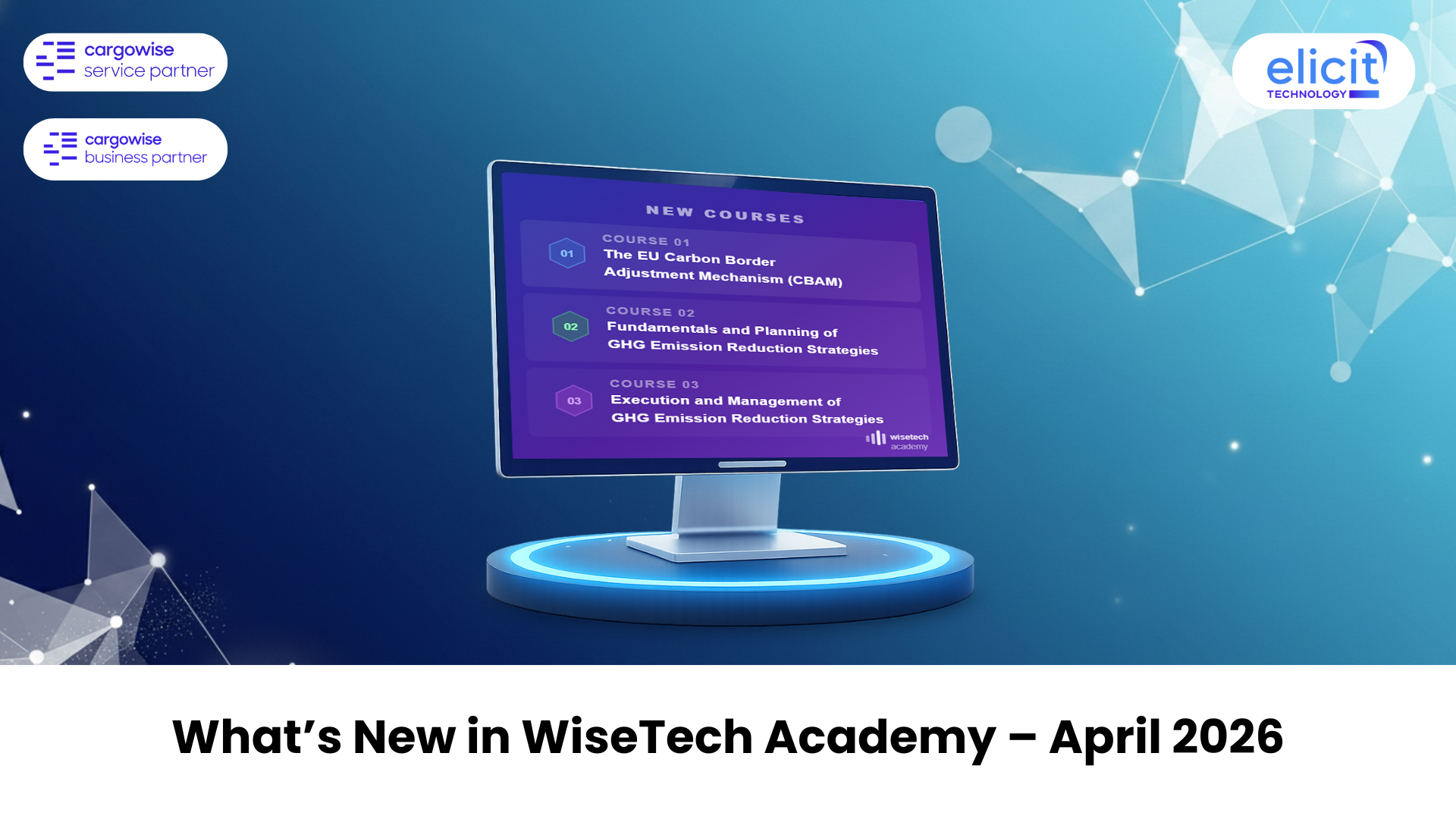
This month, WiseTech Academy introduces new learning resources focused on emissions, compliance, and practical sustainability strategies, helping logistics professionals build the foundations needed for this shift.
📊 Why Emissions and Compliance are Now Business Priorities?
Global trade is entering a more regulated phase. Policies like the EU’s Carbon Border Adjustment Mechanism (CBAM) are changing how goods are assessed, priced, and cleared across borders.
At the same time:
- Governments are tightening environmental regulations
- Customers are demanding transparency in emissions reporting
- Investors are prioritising ESG (Environmental, Social, Governance) performance
- Supply chain partners are expected to align with sustainability goals
In this environment, understanding emissions is not just a compliance task, it’s becoming part of everyday logistics operations.
🌱 Building the Foundations for CBAM Compliance
One of the most significant developments is the EU’s CBAM framework, which officially entered its definitive phase in January 2026.
For logistics professionals handling EU-bound shipments, this introduces new responsibilities around identifying affected goods, applying correct codes, and ensuring accurate reporting.
Rather than treating CBAM as a one-off requirement, businesses need to integrate it into their operational workflows. This requires both awareness and the ability to interpret evolving regulatory expectations.
♻️ From Awareness to Action: GHG Reduction Strategies
Understanding emissions is only the first step. The real challenge lies in reducing them.
Modern supply chains require structured approaches to greenhouse gas (GHG) reduction, not isolated initiatives. This includes defining clear objectives, setting measurable targets, and aligning operational activities with sustainability goals.
More importantly, these strategies must be practical. They need to work within real-world logistics environments, where cost, efficiency, and service levels all matter.
🚛 Making Sustainability Work in Daily Operations
A strategy alone does not deliver results, execution does.
For logistics teams, this means embedding sustainability into daily operations. It involves coordinating across departments, engaging suppliers, managing risks, and ensuring that emission reduction efforts are consistent and measurable.
This is where many organizations struggle. The gap between planning and execution can create delays, inefficiencies, and missed targets.
Bridging that gap requires not just knowledge, but the ability to apply it within operational systems like CargoWise.
🤝 Why Learning Alone is Not Enough?
Training and awareness are critical, but they are only part of the solution.
In complex platforms like CargoWise, sustainability and compliance workflows must be configured correctly to deliver real value. Whether it’s CBAM alignment, emissions tracking, or reporting structures, the system needs to reflect how your business operates.
Without the right setup:
- Compliance processes may remain fragmented
- Emission data may lack accuracy or visibility
- Teams may struggle to translate knowledge into action
- Operational efficiency may be affected
This is why successful organizations combine learning with expert implementation and optimisation.
📈 The Competitive Advantage of Being Prepared
Logistics companies that invest early in sustainability capabilities are already seeing benefits:
- Stronger compliance with evolving regulations
- Improved customer trust and transparency
- Better alignment with global ESG expectations
- More efficient and future-ready operations
As sustainability becomes a standard expectation, being prepared is no longer optional, it is a competitive advantage.
📌 The Key Takeaway
The logistics industry is changing, and sustainability is at the centre of that change.
Understanding regulations like CBAM and building effective GHG strategies is essential. But the real value comes from applying that knowledge in a way that fits your operations.
Because in today’s environment, success is not just about knowing what to do, it’s about being able to do it effectively.
Elicit Technology helps logistics businesses translate learning into real operational outcomes from compliance setup to sustainability workflows within CargoWise.