







CargoWise supports freight forwarders across shipment management, customs, accounting, warehousing, and other logistics operations. Yet every logistics business has its own processes, customer requirements, reporting expectations, and operational challenges.
A freight forwarder may need a customized invoice that includes additional customer references. Another may require a report that brings together shipment exceptions, outstanding milestones, and operational performance. A third may want to improve how different departments access and interpret information.
These requirements are not new, and they are not restricted to a particular year.
CargoWise customization has always been about adapting supported system capabilities to the way a business operates. However, as freight forwarders prepare for 2027, the opportunity is to move beyond isolated document changes and consider how customization can support better operational decisions, connected workflows, and more efficient exception management.
The question is worth asking: What customization challenges are your teams facing today, and what should you improve before those challenges become part of another year’s operations?
What CargoWise Customization Challenges are Freight Forwarders Facing Today?
Most customization requirements begin with an operational inconvenience.
An employee exports a report because the standard layout does not provide the required information. A customer service representative manually prepares a shipment summary. An accounts executive adjusts invoice details to meet a customer’s documentation requirements.
These activities may appear manageable individually, but they often indicate that existing CargoWise outputs do not fully reflect how the business needs to operate.
Common challenges include inconsistent document formats, limited visibility of relevant information, repetitive reporting work, customer-specific documentation requirements, and difficulty maintaining standardized outputs across branches.
Another challenge is identifying the correct solution.
A business may request customization when its requirement could be addressed through existing CargoWise configuration. In other situations, a request involving information from external applications may require integration rather than a customized report.
This distinction matters because unnecessary customization can introduce maintenance requirements without resolving the underlying problem.
Freight forwarders should begin by understanding where employees experience recurring difficulties and whether the information they need is already available within CargoWise.
How can CargoWise Customization Improve Operational Exception Management?
Operational exceptions are a normal part of freight forwarding.
A shipment may experience a customs hold, a missed connection, an incomplete document, or an unexpected delivery change.
Managing these situations requires timely information and clear responsibilities.
Consider a freight forwarder handling multiple international shipments. One shipment is awaiting customs documentation, another has a delayed arrival, and a third requires customer approval before delivery.
The operations team needs to understand which shipments require attention and what information is available to support the next action.
CargoWise customization support can help improve how screens, documents, and reports present relevant operational information.
For example, a customized operational report may organize existing shipment references, milestone information, or other available data in a format suited to the team’s daily review.
A department-specific output may help employees identify the information relevant to their responsibilities without repeatedly preparing separate spreadsheets.
However, customization alone does not create real-time tracking, predict delays, or automatically resolve exceptions. Those capabilities depend on the underlying data, system functionality, business rules, and any relevant integrations.
The practical benefit of customization is making available information easier to review, communicate, and act upon.
For 2027, freight forwarders should consider whether their existing CargoWise outputs help teams manage exceptions efficiently or whether important information is unnecessarily difficult to access.
Which CargoWise Customization Services can Address Your Operational Challenges?
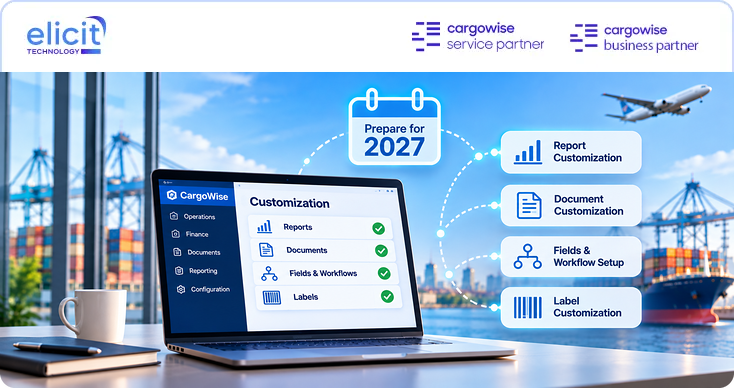
Different customization requirements call for different solutions. Understanding the four core customization areas helps freight forwarders identify where changes can provide practical value.
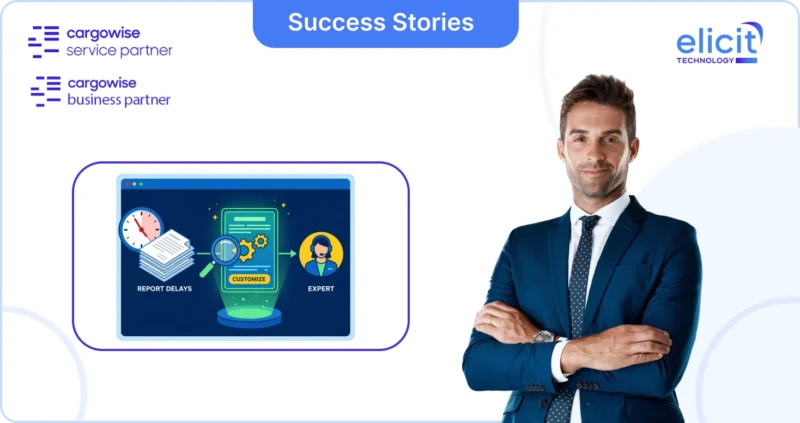
CargoWise Report Customization
Operations and management teams often need reports that present shipment activity, financial information, or exceptions in a specific format.
With CargoWise Report Customization, businesses can explore tailored reporting outputs that organize available information according to their requirements.
For example, an operations manager may need a consolidated report showing delayed shipments, outstanding milestones, and customer references. A customized report can help present this information more clearly, subject to the available data and supported reporting functionality.
CargoWise Document Customization
Customers, carriers, and business partners may require different document layouts or specific reference information.
CargoWise Document Customization helps freight forwarders adapt supported document templates to their business and customer requirements.
This may involve invoice layouts, shipment documentation, and other operational documents where consistent presentation reduces repetitive manual adjustments.
CargoWise Screen Customization
Different departments need different information to perform their responsibilities.
Through CargoWise Screen Customization, businesses can assess supported options for adapting screen layouts and improving how relevant information is presented to users.
For instance, an operations team may prioritize shipment milestones and references, while finance users focus on transaction details.
CargoWise Label Customization
Cargo identification is essential in warehousing and cargo handling.
CargoWise Label Customization can help businesses adapt supported label formats to display relevant cargo references, identification details, and other available information.
This can support clearer cargo identification and more consistent handling processes.
Together, these customization services help businesses address specific information and presentation requirements across their logistics operations.
Why should CargoWise Customization Focus on Business Processes Rather than Individual Requests?
Customization projects sometimes begin with a request to add a field, change a document layout, or create another report.
These requests may be valid, but implementing them individually without considering the broader process can create inconsistent results.
For example, a customer service team may request a new shipment report because employees struggle to prepare updates.
Before developing the report, the business should understand how shipment updates are currently prepared, which information is required, and whether the existing data is reliable.
The underlying issue may involve inconsistent milestone updates rather than the report itself.
Similarly, a finance department may request an invoice customization when the actual problem is incomplete customer reference information.
A process-led assessment helps identify whether customization is the appropriate solution.
This approach also encourages businesses to consider how changes affect other departments.
An invoice layout used by one branch may eventually become relevant to other locations. A reporting format developed for operations may also support customer service or management.
When customization is planned around recurring business needs, it becomes easier to maintain consistency and avoid unnecessary duplication.
Can Advanced CargoWise Customization Support Automation and AI-Driven Operations in 2027?
Automation and AI are creating new opportunities for logistics businesses to improve how they process information and manage routine activities.
As these capabilities develop, CargoWise users may need to reconsider how their existing documents, reports, and operational outputs support more connected workflows.
For example, a business introducing automated document processing should examine whether its source information is consistent and whether the resulting documents meet operational requirements.
A company using AI-assisted analysis may also need clearly defined reporting structures and reliable underlying data.
CargoWise customization can support these initiatives by improving the presentation and consistency of supported outputs.
However, customization, automation, and AI serve different purposes.
Customization adapts supported system elements to business requirements. Automation executes defined activities with reduced manual intervention. AI-assisted functionality may help interpret information or support specific tasks where those capabilities are available.
The strongest results come from understanding how these capabilities work together rather than treating them as interchangeable.
Looking toward 2027, advanced CargoWise customization should be about more than adding fields or redesigning documents. Businesses should evaluate whether supported customization can complement automation, improve the usability of operational information, and reduce avoidable manual handling.
These are opportunities to assess, not guarantees of future CargoWise product functionality.
How can CargoWise Customization Improve Collaboration Across Logistics Departments?
Freight forwarding depends on coordination between operations, customer service, customs, finance, and management.
Each department may use information from the same shipment but require it for different purposes.
An operations employee may focus on shipment milestones and outstanding actions.
A customer service representative may need a clear summary of shipment progress.
A finance employee may require accurate transaction references and charge information.
When employees rely on manually prepared documents or separate reporting formats, information can become inconsistent.
Supported CargoWise customization can help businesses develop more standardized outputs for different operational responsibilities.
For instance, a shipment summary designed for internal operations may prioritize references and milestones, while a customer-facing document may emphasize information relevant to the recipient.
This can help reduce repeated clarification and improve the consistency of information shared between teams.
Businesses should also consider how frequently customized outputs are used and whether employees have access to the appropriate information.
Effective collaboration depends on accurate records and well-defined responsibilities. Customization can support these processes, but it cannot replace them.
What should Freight Forwarders Prioritize in Their CargoWise Customization Plans for 2027?
A new year provides a useful opportunity to review existing workflows, but CargoWise customization does not need to wait for January.
Businesses can evaluate and implement suitable improvements whenever operational requirements justify them.
For freight forwarders planning their next phase of CargoWise development, five priorities deserve consideration.
1. Review recurring manual work. Identify reports, documents, and operational outputs that employees repeatedly adjust outside CargoWise.
2. Improve exception-related information. Examine whether teams can easily review the available shipment details needed to investigate delays, holds, or incomplete processes.
3. Standardize frequently used outputs. Review inconsistencies across departments, branches, and customer-facing documents.
4. Assess automation readiness. Determine whether existing data and outputs can support planned automation or AI-related initiatives.
5. Evaluate long-term maintainability. Ensure proposed customizations can be supported as operational requirements and CargoWise functionality evolve.
The objective should not be to customize as many system elements as possible.
Instead, freight forwarders should prioritize changes that address measurable operational difficulties and provide clear value to the employees using them.
A practical review can also reveal where standard CargoWise functionality, configuration, training, or integration would be more suitable than customization.
How can Elicit Technology Help You Plan More Effective CargoWise Customization?
CargoWise customization requires both technical understanding and practical knowledge of freight forwarding operations.
A request that appears straightforward may affect document generation, reporting, data presentation, or existing processes.
As an official CargoWise Service and Business Partner, Elicit Technology helps freight forwarders and logistics businesses assess their customization requirements and identify suitable approaches.
Our specialists can review existing CargoWise reports, documents, screens, and labels to understand where improvements may be beneficial.
We also help businesses distinguish between customization, configuration, automation, and integration requirements.
For example, if a team regularly exports shipment information to create an operational report, Elicit can assess whether an appropriate customized output is supported.
If the requirement involves information from an external application, an integration assessment may be necessary.
This approach helps businesses focus on practical improvements rather than introducing changes that add complexity.
Whether your organization is addressing current operational difficulties or preparing its CargoWise environment for 2027, customization should be guided by clear business requirements.
Conclusion: What will Better CargoWise Customization Mean for Your Operations in 2027?
CargoWise customization is not a one-time activity or a feature restricted to a particular year.
As freight forwarding businesses grow, their reporting needs, customer expectations, and operational processes continue to change.
The challenge is determining whether the current CargoWise environment supports those changes effectively.
Customizing a document, improving a report, adapting a screen, or refining a cargo label can be valuable when it addresses a genuine operational requirement.
Looking toward 2027, freight forwarders should consider how customization can support clearer information, better departmental coordination, and more effective exception management.
The goal is not simply to make CargoWise look different. It is to make the system more useful for the people managing shipments, customers, and financial operations every day.
What has been your biggest CargoWise customization challenge so far?
Whether it involves documents, reports, screens, labels, or evolving business requirements, Elicit Technology can help assess your existing setup and identify practical improvements.
Book a Consultation with our CargoWise specialists to discuss how your customization requirements can support more efficient logistics operations.