









Implementing CargoWise is an important investment for a freight forwarding business. But purchasing access to an enterprise resource planning (ERP) system does not automatically mean your operations are ready to run on it.
Consider a freight forwarder operating across three countries. Its forwarding team manages shipments, the customs department handles declarations, finance processes invoices in multiple currencies, and management needs consolidated reports.
All these activities may take place within CargoWise, but each department requires the right settings, permissions, data, and workflows.
If the system is not configured around these requirements, employees may spend more time correcting information, switching between processes, or requesting administrative assistance.
This is why CargoWise setup should begin with business requirements rather than software settings.
A structured setup helps logistics companies prepare their CargoWise environment for forwarding, customs, warehousing, transport, finance, and reporting.
Let’s explore what a complete CargoWise setup involves, the challenges businesses should consider, and how the right implementation approach can support long-term operational efficiency.
What does CargoWise Setup Mean for a Logistics Business?
CargoWise setup is the process of preparing the system to support a logistics company’s organizational structure, operating locations, users, and business activities.
It establishes the environment in which employees will perform their daily tasks.
A complete setup can involve regional settings, currencies, time zones, module activation, company branding, document templates, user permissions, and compliance-related configuration.
These elements may appear administrative, but they influence how information is entered, processed, accessed, and reported throughout the business.
For example, a freight forwarder with offices in Singapore, the United States, and South Africa may need different regional settings and currencies while maintaining consistent financial reporting across its operations.
Similarly, the customs team may require access to functions that are not relevant to warehouse employees.
A properly planned CargoWise environment accounts for these differences.
It also establishes a foundation for future integrations, workflow automation, and reporting improvements.
The goal is not simply to make CargoWise available to employees. It is to ensure that the system reflects how the business operates.
For businesses preparing to adopt the platform, understanding the common implementation mistakes can help identify important considerations before the setup process begins.
Why is Business Requirement Analysis Important Before CargoWise Setup?
One of the most important decisions in a CargoWise implementation happens before configuration begins.
The business must determine what it needs the system to accomplish.
Different logistics companies have different operational structures.
A freight forwarder specializing in ocean freight may prioritize shipment processing, carrier communication, documentation, and invoicing.
A company offering integrated logistics services may also require warehouse operations, domestic transport management, customs processing, and financial controls.
Applying the same setup approach to both businesses may overlook important requirements.
Business requirement analysis helps identify these differences.
It typically considers:
- Existing forwarding, customs, warehouse, transport, and finance workflows.
- Business locations, companies, branches, and departments.
- User roles and access requirements.
- Customer and supplier master data.
- Existing systems that need to connect with CargoWise.
- Document, compliance, and reporting requirements.
Consider a company where shipment charges are approved by one team, but invoices are issued by another.
Understanding this process before configuration helps determine the appropriate responsibilities and access arrangements.
Similarly, if management requires profitability reporting by branch, the implementation should consider how operational and financial information will be organized.
A clear requirements assessment reduces the likelihood of discovering major workflow gaps after employees begin using the system.
It also provides a reference for validating whether the completed setup meets the organization’s expectations.
For businesses preparing a broader rollout, professional CargoWise Implementation & Onboarding support can help align system requirements with operational priorities before configuration begins.
What should be Included in a Complete CargoWise Setup?
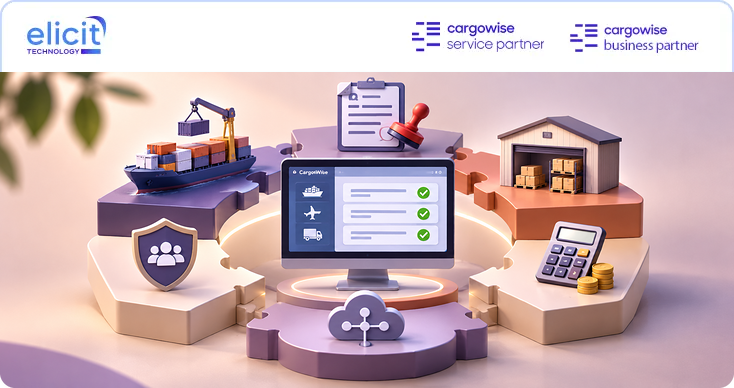
CargoWise supports several interconnected logistics activities, so its setup should address more than individual modules.
The exact requirements depend on the company’s operations, but several areas deserve particular attention.
Regional Settings, Currencies, and Time Zones
International freight forwarders often operate across locations with different currencies, business practices, and reporting requirements.
CargoWise settings should reflect the relevant operational locations and company structure.
For example, a shipment may originate in India, be managed by a Singapore office, and be invoiced in US dollars.
The organization needs appropriate currency and regional settings to support these activities.
Time zone considerations are also important when teams work across different countries.
Accurate configuration helps maintain consistency in operational records and financial processes.
CargoWise Module Activation
Not every logistics business requires the same CargoWise modules.
A company may initially focus on forwarding and finance, while another may also need customs, warehousing, and transport capabilities.
Module setup should therefore reflect the services the business actually provides.
This helps teams concentrate on relevant functions rather than introducing unnecessary complexity.
User Permissions and Security
CargoWise may be used by operations staff, finance professionals, customer service teams, warehouse personnel, and management.
These employees do not necessarily require identical access.
Role-based permissions help businesses control which users can view, create, modify, or approve relevant information.
For instance, a shipment coordinator may need access to booking and operational records, while financial approval permissions may be restricted to authorized finance personnel.
Appropriate access configuration supports security and accountability.
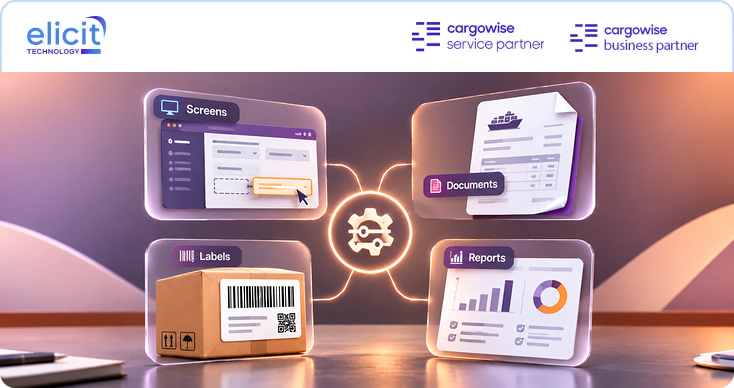
Company Branding and Document Templates
Freight forwarders regularly generate customer-facing and operational documents.
These may include invoices, shipment documents, reports, and other business communications.
CargoWise document templates can be configured to reflect the organization’s branding and relevant business requirements.
Consistent templates help employees produce standardized documents across departments and branches.
Compliance Configuration
Logistics companies must consider regulatory and operational requirements relevant to their activities.
CargoWise configuration may need to account for customs, documentation, and other compliance-related processes.
The applicable requirements will vary by country, service, and business structure.
Compliance configuration should therefore be reviewed against the organization’s actual operating environment rather than relying on a generic setup.
Businesses can explore CargoWise Configuration Services to understand how system settings, custom fields, milestones, and operational workflows can be aligned with their requirements.
How can Data Preparation and Migration Affect CargoWise Implementation?
Even a well-configured CargoWise environment can encounter problems when the underlying business data is inaccurate.
Freight forwarders depend on customer records, vendor information, port details, charge codes, and other master data to complete daily activities.
If these records contain duplicates, outdated information, or inconsistent naming conventions, the problems can continue after migration.
For example, a customer may appear under slightly different names in separate systems.
Without proper data preparation, these records could be transferred into CargoWise as separate organizations, creating confusion during shipment processing or invoicing.
A structured migration process should therefore include data extraction, cleansing, validation, and controlled transfer.
Businesses should consider whether:
- Customer and vendor information is current and complete.
- Duplicate records have been identified.
- Charge codes and other reference information are consistent.
- Relevant operational data has been mapped correctly.
- Migrated records can be verified against the source information.
Data validation is especially important when businesses are moving from an existing ERP system or multiple disconnected applications.
The objective is to preserve data integrity and minimize the risk of missing or incorrect records.
Although careful migration planning can significantly reduce these risks, no implementation should assume that data transfer is automatically error-free.
Verification and reconciliation remain essential before the new environment becomes operational.
For additional insights into implementation readiness, explore CargoWise setup best practices and how structured preparation supports a more reliable operational foundation.
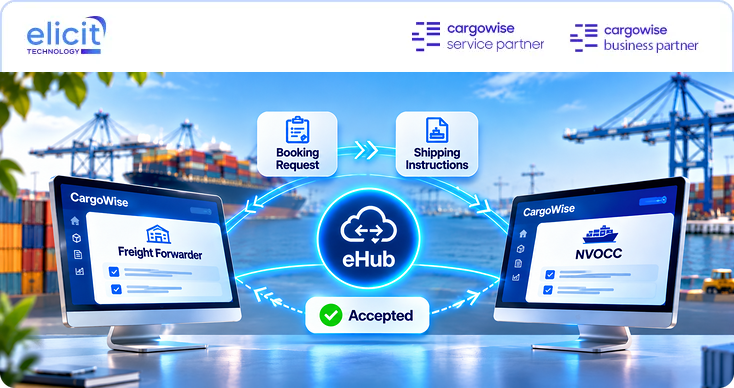
How do CargoWise Integrations Support Connected Logistics Operations?
CargoWise rarely operates in isolation.
Freight forwarding businesses may already use accounting software, customer relationship management systems, warehouse applications, customs platforms, or other specialized technologies.
Replacing every existing application may not be practical or necessary.
Instead, businesses may need CargoWise to exchange information with selected external systems.
Consider a freight forwarder using CargoWise for shipment operations and another platform for customer management.
Without integration, employees may need to enter customer information in both applications.
A suitable connection can help reduce duplicated data handling and support more consistent information exchange.
Similar requirements may exist between CargoWise and financial, warehouse, carrier, or customs-related systems.
However, successful integration depends on the capabilities of both applications and the information they need to exchange.
Before development begins, businesses should identify which systems must connect, what data should move between them, and how the exchange will support operational workflows.
This makes integration planning an important part of the wider CargoWise setup process.
Businesses should also consider how their internal processes can benefit from CargoWise Workflow Setup, which supports the configuration of milestones, event triggers, notifications, and automated actions within the system.
What Role do User Training and Go-Live Support Play in CargoWise Setup?
System configuration is only one part of a successful implementation.
Employees must also understand how to use CargoWise within their daily responsibilities.
A forwarding operator, warehouse coordinator, and finance executive may work in the same system but perform very different activities.
Training should reflect these differences.
For example, an operations employee may need practical guidance on managing shipment information, while a finance user may need training related to invoicing and financial processes.
Role-based training helps employees understand the functions relevant to their work.
It also gives teams an opportunity to identify questions or workflow concerns before the system becomes part of daily operations.
Go-live preparation should include appropriate validation of the configured environment and confirmation that critical business processes are ready.
Once the system is in use, organizations may still require assistance with user access, configuration adjustments, reports, or workflow improvements.
This is why ongoing support should be considered during implementation planning rather than only after problems arise.
A successful CargoWise setup prepares both the technology and the people who will use it.
Businesses evaluating their post-implementation requirements can also explore the types of CargoWise support freight forwarders commonly need as their operations develop.
How can Elicit Technology Support Your CargoWise Setup and Implementation?
Every logistics business has its own operational structure, customer requirements, and technology environment.
A company implementing CargoWise for the first time may need assistance with business requirement analysis, data preparation, module setup, and employee training.
An established CargoWise user may instead require support configuring additional modules, reviewing access permissions, improving workflows, or integrating external applications.
As an official CargoWise Service and Business Partner, Elicit Technology provides CargoWise Setup Support designed around these different business requirements.
Our approach begins with understanding the organization’s operational needs and confirming the intended scope.
From there, our CargoWise specialists support business requirement analysis, data preparation and migration, system configuration, module setup, and user training.
For example, a growing freight forwarding company may need to prepare CargoWise for multiple branches while maintaining consistent customer records and financial processes.
Another organization may need help connecting CargoWise with its existing finance or warehouse applications.
Elicit Technology can support these requirements through its CargoWise configuration, integration, and optimization capabilities.
We also help businesses review workflows, reports, user access, and automation opportunities as their operations evolve.
Our objective is to help logistics teams establish a CargoWise environment that supports their current processes while remaining adaptable to future business requirements.
1. What is included in a complete CargoWise setup?
A CargoWise setup may include regional settings, currencies, time zones, module activation, user permissions, company branding, document templates, compliance configuration, master data preparation, and relevant system integrations. The exact scope depends on the organization’s business requirements.
2. What is the difference between CargoWise Setup and CargoWise Configuration?
CargoWise Setup covers the broader process of preparing a business to operate in CargoWise, including requirements analysis, data preparation, module readiness, user training, and go-live support.
CargoWise Configuration focuses more specifically on adjusting system settings, permissions, workflows, documents, and related functions to meet operational requirements. Configuration is therefore an important part of the overall setup process.
3. How long does a complete CargoWise setup take?
The timeline depends on the number of users, business locations, modules, data migration requirements, integrations, and workflow complexity. A business with straightforward requirements may need less implementation time than a multinational freight forwarder with multiple operational and financial processes. A requirements assessment is necessary before establishing a realistic project schedule.
Conclusion: Build a CargoWise Environment that Supports Your Business
CargoWise setup is more than activating modules and creating user accounts.
It involves preparing the system to reflect how a logistics business manages shipments, customers, documents, financial information, and daily operations.
From business requirements analysis and data migration to security, integration, training, and ongoing optimization, each element contributes to the effectiveness of the implementation.
A structured approach helps businesses establish consistent workflows, improve information management, and prepare employees to use CargoWise with confidence.
For freight forwarders planning a new implementation or reviewing their existing environment, the right setup approach begins with understanding what the business needs from the system.
Planning to set up CargoWise for your logistics business?
Elicit Technology can help you assess your requirements, prepare your CargoWise environment, and align its configuration with your forwarding, customs, warehouse, transport, and finance operations.
Book a Consultation with our CargoWise specialists to discuss your setup requirements.