





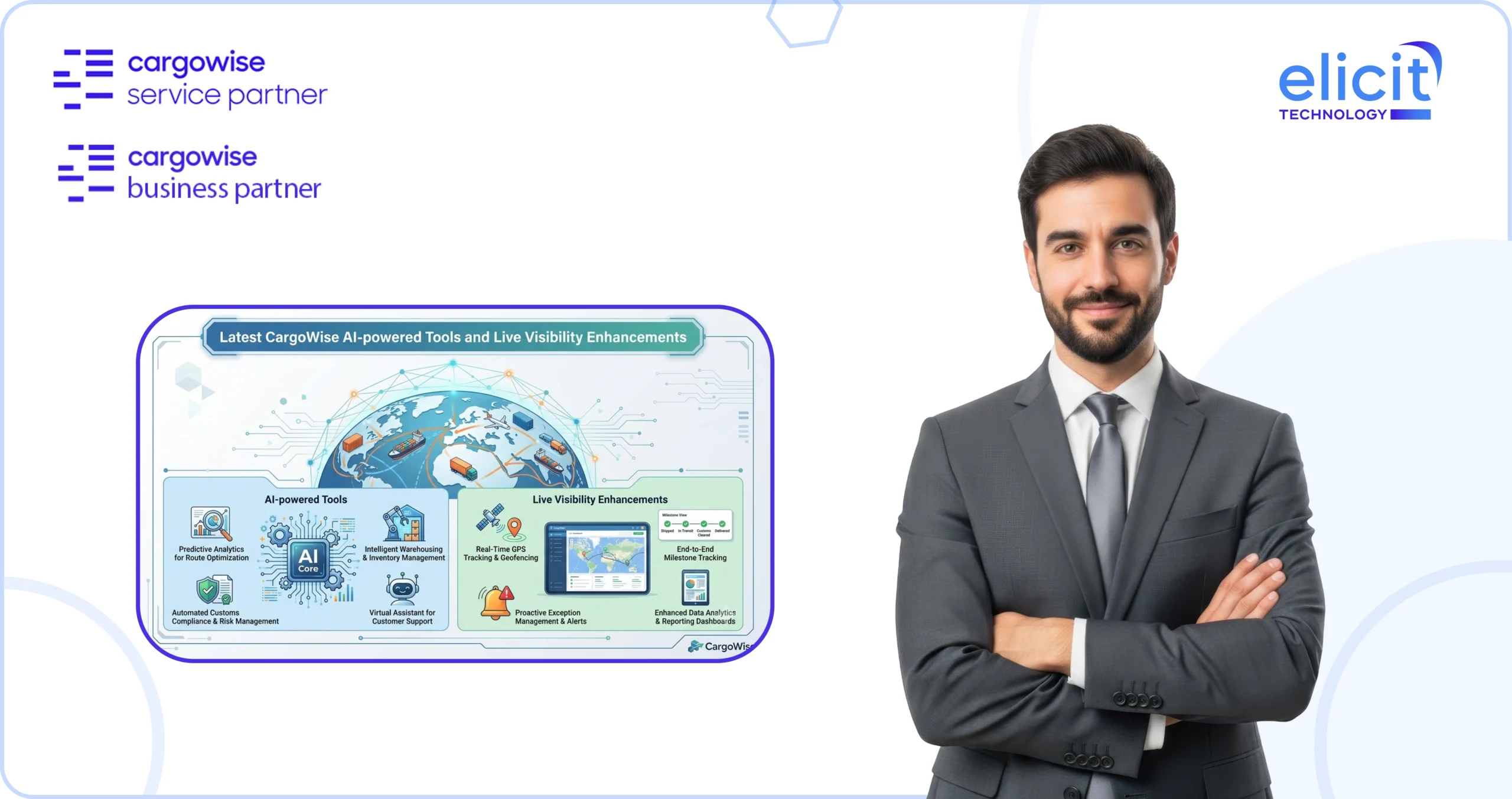
CargoWise is moving beyond simply recording what happened to helping logistics teams understand what they’re moving, where the risk sits, and where the cargo actually is.
Three developments make that direction particularly clear in 2026: smarter support for HS and commodity classification, AI-powered export compliance through ComplianceWise, and live container positioning using Hapag-Lloyd IoT data in Cargo Tracker. Together, these capabilities point toward a CargoWise environment where operational data is increasingly turned into intelligence that teams can use before a problem reaches the next stage of the shipment.
For freight forwarders already using CargoWise, the bigger question isn’t simply what’s new. It’s how these capabilities can improve everyday classification, compliance, and shipment visibility.
Why is CargoWise Moving Toward More Intelligent Logistics Operations?
Freight forwarding teams already deal with a huge amount of information. Commercial invoices, product descriptions, HS codes, shipper and consignee details, sanctions data, bookings, container events, vessel positions, and inland milestones can all influence a single shipment.
The challenge has traditionally been connecting that information quickly enough to make the right decision.
That’s where the newer direction of CargoWise becomes interesting. Rather than treating classification, compliance, and visibility as completely separate activities, AI, regulatory intelligence, IoT data, and operational workflows are increasingly being brought closer together.
For logistics teams, this can mean less time searching for information and more time reviewing exceptions, managing risks, and making operational decisions.
1. How is AI Supporting HS Classification and Commodity Decisions?
HS classification is one of those logistics tasks where a small mistake can create a surprisingly large problem.
Product descriptions aren’t always clear. Similar goods can fall under different classifications depending on their material, function, composition, or technical characteristics. Incorrect classification can affect duty calculations, customs declarations, import requirements, export controls, and ultimately whether cargo moves without interruption.
The need for better classification support is real. For example, Australian Border Force data cited by CargoWise showed tariff classification was the largest contributor to errors among assessed import declarations in FY2024–25, with reported classification errors increasing from 117 in the previous financial year to 444.
AI can help change the research-heavy part of this process.
Rather than expecting a user to begin with a short commercial description and manually investigate everything around it, AI-assisted tools can help research product characteristics and provide more structured information for review.
But this shouldn’t be understood as “AI chooses an HS code and the job is done.”
Classification still requires appropriate customs knowledge, reliable source information, and human review. The real opportunity is using technology to reduce repetitive research and give knowledgeable users better information from which to make decisions.
2. What does ComplianceWise Add Beyond Classification?
Knowing what the goods are is only one part of international trade compliance.
A shipment can have an appropriate commodity classification and still present compliance risk because of who is involved, where the cargo is going, its potential end use, or the route being used.
This is where ComplianceWise takes the discussion beyond basic HS classification.
CargoWise describes ComplianceWise as bringing product specifications, end use, destination, trading parties, and other compliance considerations together. Its AI-Assisted Commodity Screening assesses commodity lines and returns risk ratings and contextual information, while BorderWise provides regulatory intelligence covering control lists and restricted goods.
That creates a more contextual approach to compliance.
Who are you trading with?
ComplianceWise supports screening of trading parties against global denied-party, sanctions, and restriction data. CargoWise also states that built-in AI can review trading-party business activities and flag inconsistencies between a party’s profile and the goods being shipped.
What exactly are you shipping?
Commodity information can be assessed against relevant regulatory requirements. BorderWise integration supports checks involving military, dual-use, and other trade controls across origin and destination borders.
Where is the cargo going?
The system can consider countries and locations involved in the shipment, while AI agents can assess potential diversion risks across trade routes and intermediary locations.
This matters because modern export compliance can’t be reduced to one screening action. A commodity may appear ordinary in isolation but become higher risk when combined with an unusual customer, destination, end use, or routing.
How is AI Changing the Compliance Team’s Role?
The goal isn’t to remove people from export compliance.
It’s to change where their time goes.
Compliance professionals can spend significant time gathering product specifications, researching control lists, screening parties, reviewing destinations, and documenting their findings before they can even begin evaluating the actual risk.
Purpose-built AI can take on more of this research burden.
CargoWise’s recent material on AI and export compliance describes this shift as moving teams away from routine research and toward evaluating flagged risks and ambiguous cases. Human expertise remains particularly important where end uses are unclear, parties are unfamiliar, routes are unusual, or information may have been deliberately misrepresented.
That’s an important distinction for freight forwarders considering AI.
Good compliance automation shouldn’t eliminate judgment. It should give experienced people more time to apply it.
3. What is Changing with Live Container Visibility in CargoWise?
The third development moves from understanding cargo risk to understanding its physical journey.
Cargo Tracker already combines vessel AIS information, vessel port calls, and container tracking events. CargoWise’s August 2026 guidance now documents live GPS positioning for supported ocean containers equipped with active IoT tracking devices.
Currently, this live position capability is available for Hapag-Lloyd dry containers equipped with IoT tracking devices, and customers need to contact their Hapag-Lloyd representative to sign up for the service.
The development builds on the Hapag-Lloyd and WiseTech collaboration announced in February 2026. Hapag-Lloyd has equipped its dry container fleet with smart devices, and the initiative brings IoT-generated location information into WiseTech’s ecosystem, including CargoWise Cargo Tracker and Container Automation.
For users, that means shipment visibility can extend beyond vessel-level tracking and milestone events.
What can Users Actually See in Cargo Tracker?
When a supported container has active GPS data, Cargo Tracker indicates that live positioning is available and shows when its position was last detected.
Selecting the container can display its most recent live position and historical land-side positions recorded since the container was picked up empty.
The map also uses different markers to make those movements easier to interpret:
- Orange waypoints show historical stationary positions.
- Green waypoints indicate the current position of a moving container.
- A gray dot indicates that no position update has been received for more than 24 hours.
- Numbered markers represent tracking events such as Gate In, Gate Out, Load, Discharge, Arrival, and Departure.
Users can also select historical stationary points to see information such as local time and how long the container remained idle.
Street and Satellite map views provide additional context when examining land-side container locations.
Why is IoT Container Visibility Different from Traditional Tracking?
Traditional shipment tracking is largely event-driven.
A container gates in. A vessel departs. Cargo is discharged. Another milestone arrives.
The problem is the space between those events.
That’s especially important during inland transportation, where teams may know the previous milestone was completed but have limited information about what has happened since.
IoT data can help fill part of that visibility gap.
The WiseTech-Hapag-Lloyd initiative is designed to turn frequent container location updates into more meaningful operational information. Hapag-Lloyd’s Live ETA capability also uses actual IoT movement and location data to dynamically update arrival predictions across modes of transport.
This represents an important shift from simply reporting historical milestones toward more proactive shipment management.
Classification, Compliance and Visibility are Becoming More Connected
These three developments may appear unrelated at first.
One deals with commodities.
Another deals with compliance.
The third deals with physical container movement.
But together, they show where logistics technology is heading.
A logistics platform increasingly needs to understand:
What is being shipped?
HS and commodity intelligence provide context around the goods.
Can and should it be shipped?
ComplianceWise brings together commodity, party, destination, route, sanctions, and regulatory information.
Where is it now?
Cargo Tracker combines operational milestones, vessel information, and supported live IoT container positions.
The value isn’t simply having more data on screen. It’s giving operators better context for the decisions they already have to make.
What should CargoWise Users do with These New Capabilities?
Not every CargoWise customer needs to implement every capability in exactly the same way.
A freight forwarder’s requirements depend on its commodities, trade lanes, customer base, compliance exposure, carriers, operational workflows, and existing CargoWise configuration.
Businesses should therefore look beyond individual features and ask practical questions.
Where does our team still spend too much time researching classifications? How are compliance risks currently identified and escalated? Are operators relying on external systems for shipment visibility? How should new information feed into existing workflows? And which exceptions actually require human attention?
Those questions turn technology adoption into operational improvement.
How Elicit Helps CargoWise Users Adopt Smarter Capabilities?
New CargoWise functionality creates value only when it fits properly into the way your business operates.
As a CargoWise Service and Business Partner, Elicit Technology helps freight forwarders understand, configure, optimize, and integrate CargoWise capabilities around their operational requirements. From forwarding and customs to workflows, automation, integrations, reporting, and system optimization, we help businesses move from simply having access to CargoWise functionality to using it effectively.
As AI-assisted compliance, smarter commodity intelligence, and live visibility continue to develop, the configuration behind these capabilities becomes increasingly important. Elicit can help assess your existing CargoWise environment, identify where new functionality can add value, and align your workflows and processes around it.
Conclusion
CargoWise’s 2026 developments show a clear direction: logistics technology is becoming more intelligent, contextual, and connected.
AI-supported commodity and HS classification can reduce the research burden around complex goods. ComplianceWise can bring commodities, parties, destinations, routes, and regulatory information into a more connected risk assessment process. And Hapag-Lloyd IoT integration is extending Cargo Tracker visibility into live and historical container positioning for supported equipment.
None of these capabilities removes the need for experienced logistics professionals. Instead, they can give those professionals better information and more time to focus on the decisions that matter.
If your organization wants to understand how these new capabilities fit into your current CargoWise environment, contact us we can help you evaluate the opportunities, configure the right processes, and turn new CargoWise functionality into practical operational value.