







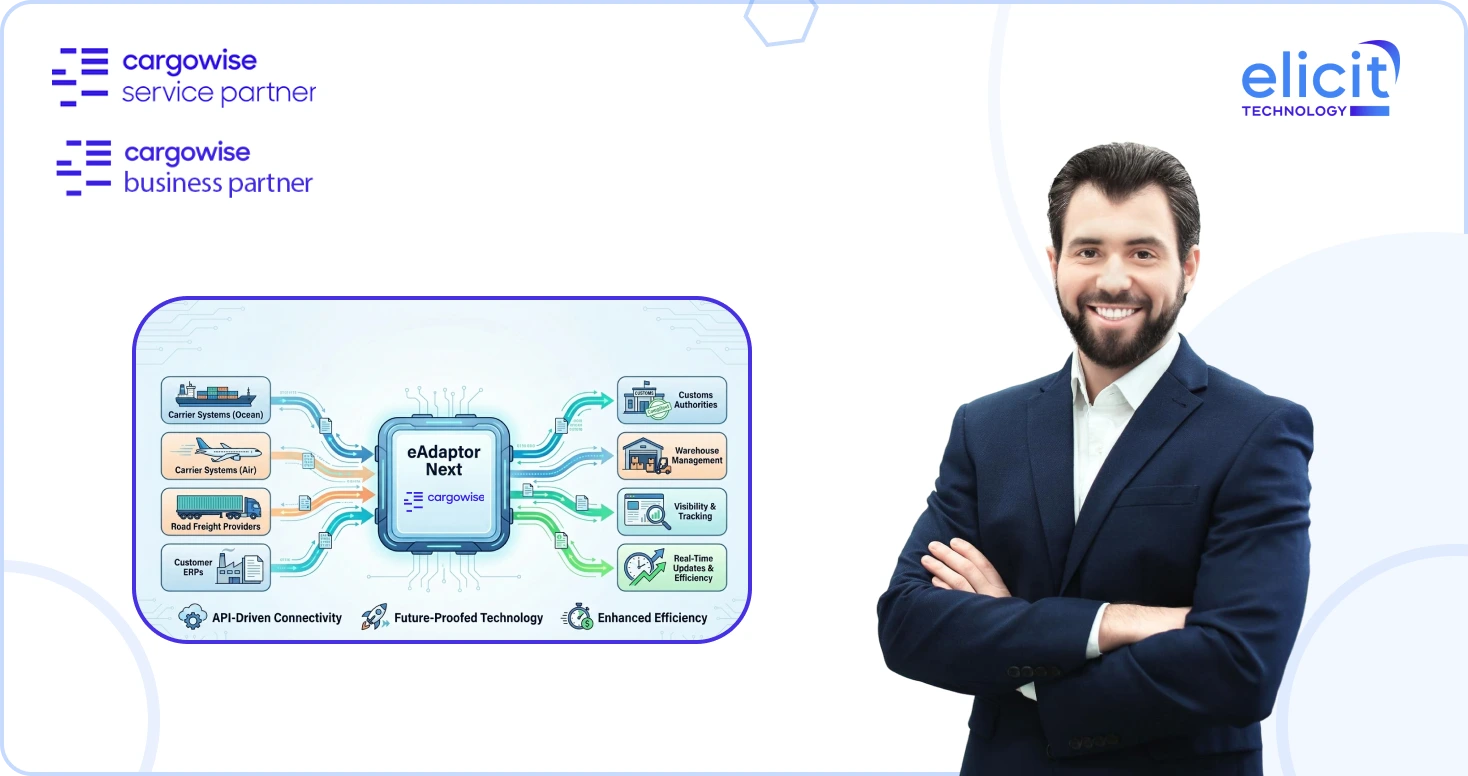
A lot of CargoWise users are hearing the term “eAdaptor Next” lately, but many still are not fully sure what it actually means, why WiseTech introduced it, or how it could impact their existing integrations and operational workflows.
At first glance, it may sound like another technical system update sitting quietly in the background. But for logistics companies relying heavily on integrations, automation, APIs, EDI connections, customer portals, finance systems, and operational visibility, this is a much bigger shift than most people realize.
The truth is, many CargoWise environments running today were built years ago. Some integrations were developed 10, 15, or even 20 years ago and simply continued evolving over time. They still work, but the technology standards behind them are no longer aligned with how modern logistics systems need to operate securely and efficiently.
That’s where CargoWise eAdaptor Next comes in.
And for many freight forwarders, customs brokers, NVOCCs, warehouse operators, and logistics providers, this update may eventually become one of the most important integration transitions they’ll face inside CargoWise.
Why are CargoWise Integrations Evolving?
The logistics industry today is operating in a completely different digital environment compared to a decade ago.
Back then, integrations were relatively simple:
- Sending shipment milestones
- Sharing invoice data
- Basic EDI transactions
- Limited customer visibility
- Internal accounting exports
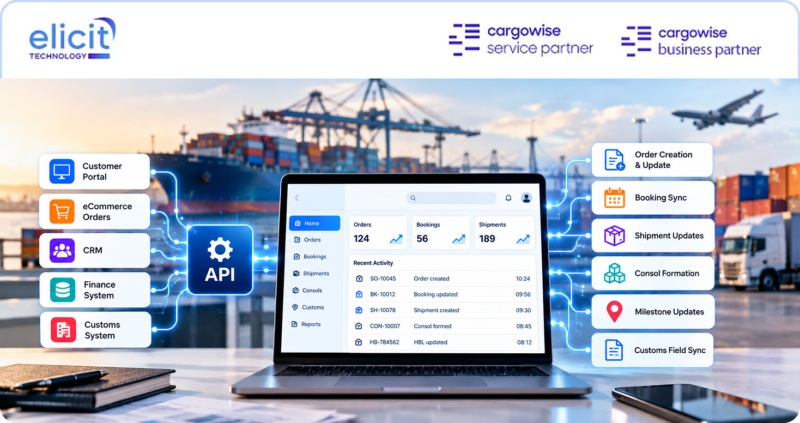
Today, logistics companies expect real-time connectivity across:
- Operations
- Finance
- Warehousing
- Customer portals
- BI dashboards
- AI automation tools
- Visibility platforms
- Customs systems
- API ecosystems
- External ERP environments
- Mobile applications
- Third-party logistics platforms
The amount of data moving between systems has grown dramatically.
At the same time, cybersecurity risks, compliance expectations, and authentication standards have become much stricter globally.
Older integration structures were never designed for the scale, security, and real-time demands modern logistics businesses now require.
WiseTech’s move toward eAdaptor Next is part of a broader modernization strategy to prepare CargoWise environments for the future.
What Exactly is CargoWise eAdaptor Next?
In simple terms, CargoWise eAdaptor Next is the newer and more advanced version of the traditional CargoWise integration framework.
It modernizes how external systems securely connect and communicate with CargoWise.
Previously, many CargoWise integrations relied heavily on older authentication methods such as:
- Username and password authentication
- Legacy communication methods
- Traditional access configurations
While those methods worked for many years, they are now considered less secure and harder to scale in modern enterprise environments.
eAdaptor Next introduces more modern integration standards, including:
- Certificate-based authentication
- Enhanced API security
- Token-based communication
- Better encryption methods
- Improved access controls
- More scalable integration architecture
- Stronger long-term security management
This creates a far more secure and future-ready integration environment for CargoWise users operating globally.
Why does this Update Matter More than Most CargoWise Users Think?
A lot of companies assume this is simply an IT-side technical change.
It’s not.
The reality is that CargoWise integrations sit at the center of daily logistics operations.
If integrations stop functioning properly, the impact spreads quickly across the business:
- Shipment visibility can break
- Invoice automation can fail
- Customer portals may stop updating
- EDI messages may fail
- API workflows may disconnect
- Operational milestones may disappear
- Reporting environments may stop synchronizing
- Finance data may become delayed
For businesses that rely heavily on automation, even small integration issues can create major operational bottlenecks.
And here’s the bigger issue many companies are now realizing:
A large percentage of existing CargoWise integrations were built years ago, often with:
- Limited documentation
- Older architecture
- Hardcoded workflows
- Custom legacy configurations
- Minimal optimization
- Multiple layered modifications over time
As CargoWise continues evolving, those older environments eventually become harder to maintain, scale, and secure.
Which CargoWise Integrations Could be Affected?
Potentially, any integration relying on older eAdaptor environments may eventually require review or modernization.
This can include:
- ERP integrations
- Customer portals
- Warehouse systems
- Customs platforms
- Visibility solutions
- Finance systems
- BI dashboards
- Shipment tracking tools
- Automation workflows
- AI-based processing systems
- API integrations
- EDI environments
- Vendor communication platforms
- External reporting systems
For some companies, updates may be relatively straightforward.
For others with heavily customized CargoWise ecosystems, the transition may require significant architectural planning and optimization.
The Hidden Problem With Older CargoWise Integration Environments
One of the biggest challenges many logistics companies face is that their CargoWise environment evolved gradually over many years without strategic redesign.
What usually happens is:
- A system gets implemented
- One integration gets added
- Another workflow gets customized
- More automation gets layered in
- Reporting tools get connected
- APIs get added later
- External systems get attached over time
Eventually, businesses end up with highly complex integration ecosystems that nobody fully documents or optimizes properly.
On the surface, everything appears to work.
But underneath, the system may contain:
- Inefficient workflows
- Redundant processing
- Outdated authentication methods
- SQL performance issues
- API bottlenecks
- Security gaps
- Poor scalability
eAdaptor Next forces companies to finally evaluate those environments properly.
And honestly, that’s not a bad thing.
Why eAdaptor Next is Actually a Good Long-Term Move?
While transitions can feel disruptive initially, eAdaptor Next is ultimately designed to improve the CargoWise ecosystem significantly.
The long-term benefits are substantial.
Better Security
Modern authentication and certificate-based communication dramatically reduce security risks compared to older login-based integrations.
Improved Scalability
As logistics operations continue growing globally, businesses need integration frameworks capable of handling larger data volumes more efficiently.
Cleaner Integration Architecture
Many older integrations became overly customized over time. Modernized frameworks help simplify and standardize connectivity.
Stronger API Capabilities
Future CargoWise innovation is heavily focused on APIs, AI, automation, and connected logistics ecosystems. eAdaptor Next supports that direction much better.
Future-Proofing Your CargoWise Environment
CargoWise is evolving rapidly toward:
- CargoWise Next
- AI-enabled workflows
- Real-time visibility
- Automation-first operations
- Advanced API connectivity
- Intelligent data orchestration
eAdaptor Next becomes part of that broader transformation.
Why do Most CargoWise Users Need Expert Guidance During this Transition?
This is where many businesses underestimate the complexity involved.
Migrating integration environments is not simply about replacing authentication credentials.
A proper modernization project may involve:
- Reviewing current integrations
- Mapping workflow dependencies
- Evaluating API architecture
- Redesigning automation logic
- Optimizing SQL performance
- Configuring certificates
- Managing external system dependencies
- Testing operational workflows
- Validating finance synchronization
- Protecting operational continuity
Every CargoWise environment is unique.
Some companies have relatively simple integration structures.
Others operate highly customized ecosystems involving:
- Multiple countries
- Multiple business units
- Different operational workflows
- External finance systems
- Visibility platforms
- EDI environments
- Customer-specific integrations
That’s why experienced CargoWise service partners become incredibly important during these transitions.
How Elicit Helps CargoWise Users Modernize Their Integration Environment?
At Elicit, we help CargoWise users evaluate, modernize, optimize, and future-proof their integration environments.
As an official CargoWise service partner, we work closely with logistics businesses to:
- Analyze the current integration architecture
- Review legacy eAdaptor environments
- Optimize API performance
- Improve automation workflows
- Modernize EDI environments
- Enhance system scalability
- Reduce operational bottlenecks
- Improve SQL efficiency
- Strengthen integration security
- Support eAdaptor Next transition planning
But more importantly, we approach CargoWise from both a technical and operational perspective.
Because the goal is not simply to “upgrade integrations.”
The goal is to help logistics businesses:
- Reduce manual work
- Improve visibility
- Lower operational risk
- Increase automation
- Improve ROI
- Scale more efficiently
- Build smarter logistics operations
The Future of CargoWise is Becoming More Connected, Automated, and Intelligent
CargoWise today is no longer just a freight forwarding platform.
It’s becoming a connected logistics ecosystem powered by:
- Automation
- APIs
- AI
- Visibility
- Real-time data
- Intelligent workflows
- Integrated finance
- Advanced reporting
- Global operational connectivity
eAdaptor Next is one of the building blocks supporting that future.
The companies that prepare early will be in a much stronger position to:
- Scale operations faster
- Improve automation
- Support AI initiatives
- Enhance customer visibility
- Strengthen security
- Modernize workflows
- Reduce operational inefficiencies
The companies that delay may eventually face rushed upgrades, operational risk, and expensive integration remediation projects later.
Conclusion
CargoWise eAdaptor Next is much more than a technical integration update.
It represents the next phase of how CargoWise environments will securely connect, automate, and exchange information in the future.
For logistics companies relying heavily on integrations, APIs, automation, customer visibility, finance connectivity, and operational data flow, now is the right time to evaluate your current environment and prepare strategically.
At Elicit, we help CargoWise users modernize their systems through expert integration consulting, API optimization, automation solutions, customization, reporting improvements, and long-term CargoWise scalability planning. If your business wants to future-proof its CargoWise environment, optimize integrations, reduce operational inefficiencies, and prepare for the next generation of logistics technology, schedule a call today. We are ready to help make it happen.