





A customs specialist receives an invoice describing the goods as simply “machine parts.” Before classification can begin, someone needs to determine what the product actually is, what it is made from, how it functions, and which specifications matter.
Elsewhere, an operations team is waiting for a technical document from a supplier. Someone sends an email, follows up two days later, and then has to remember which shipment needed the information.
At the same time, the sales team is building a freight quote, checking rates, getting approval, and eventually handing the accepted pricing to operations.
Different problems, but they share the same weakness: too much important work depends on people manually finding, requesting, transferring, and re-entering information.
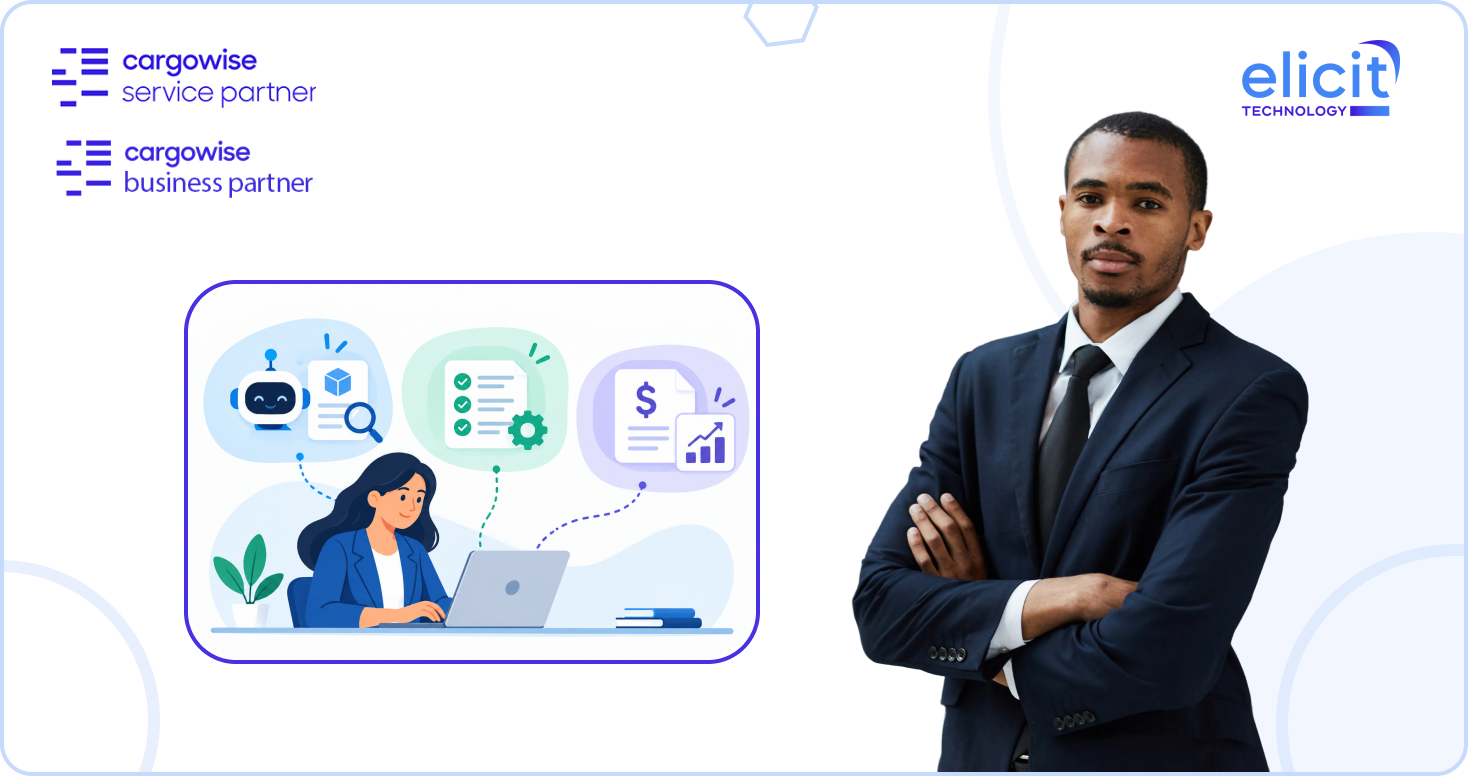
The latest CargoWise enhancements are targeting those gaps with three capabilities: an AI-powered Product Research Agent, Smart Auto Request Agent, and Quote Management. Together, they show CargoWise moving beyond simply storing logistics data toward helping teams research information, manage exceptions, and connect commercial decisions with downstream operations.
How does the CargoWise Product Research Agent Support Tariff Classification?
Accurate tariff classification depends on knowing exactly what the goods are.
The problem is that commercial invoices often do not provide enough information to make that decision confidently. A customs team may receive only a short description, product number, or supplier name.
That can leave specialists searching supplier websites, manufacturer pages, product catalogs, and technical data sheets to answer questions such as:
What material is the product made from?
What does it do?
How is it used?
What are its important technical characteristics?
CargoWise’s new AI-powered Product Research Agent brings more of this research into the customs workflow.
Using information already available on the commercial invoice line and customs declaration, the agent searches sources including supplier and manufacturer websites, product catalogs, and data sheets to identify the product and collect information relevant to classification.
Once the research is complete, the invoice line can be populated with a product summary, structured product attributes, and the sources used for the research.
That last part matters.
AI-generated research is more useful in a compliance environment when the customs specialist can see the supporting evidence rather than receiving an unexplained answer.
Can CargoWise Research Multiple Products at Once?
Product research becomes particularly time-consuming when an invoice contains dozens of lines.
Researching one unfamiliar item manually might be manageable. Researching 50 or 100 different products can quickly consume hours.
The Product Research Agent can initiate research for one invoice line or up to 100 lines in a single run, while each line is researched and assessed individually.
CargoWise also provides a status indicating which product lines have been completed and which still require additional information.
This changes the operator’s role.
Instead of manually researching every product from the beginning, the customs specialist can focus attention on the lines where the available information remains insufficient or requires professional judgment.
The AI handles more of the research workload.
The specialist remains responsible for the classification decision.
How does Product Research Improve the CargoWise Classification Assistant?
The Product Research Agent does not operate as an isolated AI feature.
The confirmed information can feed directly into the Classification Assistant.
This is particularly useful because tariff classification quality depends heavily on context. If the classification process begins with little more than a vague invoice description, additional questions will naturally be required before the goods can be classified properly.
When richer product information is already available, including function, materials, specifications, and other relevant attributes, the Classification Assistant has more context to work with.
According to the CargoWise update, this can improve classification accuracy while reducing the number of questions needed to correctly classify the goods.
The workflow therefore becomes connected:
Invoice data → Product research → Supporting evidence → Classification assistance → Human classification decision
The objective is not to remove customs expertise. It is to reduce the manual research customs professionals need to perform before applying that expertise.
What Happens When AI cannot Find Enough Information?
This is where the second enhancement becomes important.
AI can search for information, but not every answer exists publicly.
A technical specification may only be available from the supplier. A required statement may sit with the customer. A missing document might need to come from the consignor.
Traditionally, that creates another manual workflow.
An operator identifies what is missing, determines who has it, writes an email, waits for the response, follows up, downloads the attachment, and then associates the information with the appropriate job.
The CargoWise Smart Auto Request Agent is designed to automate more of that process.
When CargoWise identifies an information gap, the agent can raise a request for the specific document or answer required.
For example, if the Product Research Agent cannot find sufficient technical information to identify a product, additional details can be requested. Similarly, ComplianceWise can request information needed to assess a compliance risk.
Instead of the information gap simply becoming another task for an operator to remember, it becomes part of a structured request process.
How does the Smart Auto Request Agent Reduce Email Chasing?
One particularly useful aspect of the Smart Auto Request Agent is how it handles multiple information gaps.
Suppose CargoWise identifies three separate questions that all need to be answered by the same supplier.
Without coordination, that supplier could receive three different emails as each requirement is discovered.
Smart Auto Request Agent can combine related requests for the same recipient, allowing the customer, supplier, or other party to receive one consolidated set of questions rather than repeated requests.
Recipients can then provide their responses through CargoWise Neo or through a secure guest link without requiring a CargoWise login.
As responses arrive, the information and supporting documents are captured against the relevant job.
Operators can see what was requested, what has been received, and what remains outstanding.
Responses can also be validated during submission, helping identify unsuitable evidence before it reaches the operator for final review.
That is significantly different from a conventional email chain where the operational context can easily become separated from the information being requested.
Why does Reusing Collected Information Matter?
There is another inefficiency that logistics teams encounter constantly: asking for the same information more than once.
One department requests a technical specification.
A compliance team asks for it again.
Another shipment requires the same evidence several weeks later, and someone starts another email chain because nobody knows the document was already supplied.
Smart Auto Request Agent addresses part of this problem by capturing information once and retaining it against the job so that the same evidence can be reused where appropriate.
The broader principle is important for CargoWise automation:
Information should be collected once, structured correctly, and reused wherever the business process allows.
Every time the same information has to be requested or entered again, there is another opportunity for delay and inconsistency.
What is New About Quote Management in CargoWise?
The third enhancement moves away from customs and compliance into the commercial side of freight forwarding.
Freight quoting has its own version of the same information problem.
Sales needs to understand the customer’s requirements, define the freight scope, identify the correct rates and charges, secure approvals, send the quote, handle customer feedback, and then make sure the final agreed pricing follows the job into operations.
If those stages are disconnected, accepted pricing can end up being recreated manually once the shipment begins.
CargoWise Quote Management provides a guided way to manage this process while continuing to use CargoWise’s existing rates and pricing capabilities behind the scenes.
A consolidated landing page brings quote activity into a single view, including quotes created through Quote Management and existing records from the Quotations module.
Sales teams can see quote status, search and filter records, and identify which quotations require attention.
Can CargoWise Connect CRM Opportunities with Freight Quotes?
Yes, and this is where Quote Management becomes particularly relevant to sales-to-operations continuity.
A quote can be created directly through Quote Management or initiated from a CRM opportunity.
When it originates from the CRM opportunity, relevant scope information can be carried into the quote while maintaining a link back to the opportunity.
Users can then define the service, cargo, and routing requirements for each quote scope.
Charges can be entered manually or eligible rates can be sourced through CargoWise Carrier Connect and brought into the quotation.
The quote can then move through existing approval controls before being finalized and issued to the customer.
The customer can either accept the quotation or request further discussion.
The bigger improvement happens after acceptance.
What Happens to Pricing After a CargoWise Quote is Accepted?
An accepted quotation should not become a PDF that operations later has to interpret and recreate.
CargoWise Quote Management connects the commercial process further downstream.
Once accepted, the quote can be converted into a client rate, allowing the agreed pricing to support downstream job auto-rating.
This connects three stages that are often separated:
Sales opportunity → Quotation → Accepted pricing
That continuity can reduce duplicate entry while improving traceability between what sales offered and what operations ultimately uses.
For finance and management, it can also make it easier to understand where pricing originated instead of trying to reconstruct the commercial decision after the shipment has already moved.
What do these New CargoWise Features Have in Common?
At first glance, product research, information requests, and freight quotations appear unrelated.
But they are solving a similar operational problem.
Traditional logistics workflows frequently stop when information is missing.
The customs specialist stops and searches the web.
The operator stops and emails the supplier.
The salesperson stops and searches for rates.
The operations team stops and recreates accepted pricing.
These newer CargoWise capabilities are designed to keep more of those processes connected.
The Product Research Agent brings external product research into the customs workflow.
The Smart Auto Request Agent turns missing information into a structured request and collection process.
Quote Management connects freight requirements, rates, approvals, customer acceptance, and downstream pricing.
This reflects a broader change in how CargoWise automation is evolving.
The system is not only recording what users have already done. Increasingly, it is helping identify what needs to happen next.
Does AI Replace the CargoWise Operator or Customs Specialist?
No, and the Product Research Agent provides a good example of why.
AI can investigate available product information, organize relevant attributes, show supporting sources, and give the Classification Assistant richer context.
But CargoWise specifically keeps the final classification decision in the user’s hands.
That distinction is particularly important in customs and compliance.
The strongest use of AI is not necessarily making every decision autonomously. It is removing the repetitive research and administrative work surrounding the decision so specialists can focus on the areas where their judgment matters.
The same principle applies to information requests.
Automation can identify missing information, send requests, consolidate questions, capture responses, and validate submissions.
The operator can concentrate on the exception rather than managing the email trail.
What Should CargoWise Users Review Before Using these Capabilities?
New functionality delivers the most value when the surrounding CargoWise environment is already structured properly.
Before adopting these capabilities, businesses should consider their existing product and organization data, customs workflows, user responsibilities, quotation processes, rate configuration, CRM usage, approval controls, and exception-management processes.
For example, automating product research has limited value if the underlying commercial invoice information consistently enters CargoWise incorrectly.
Similarly, Quote Management will not solve an unclear pricing process simply because the interface is more streamlined.
Technology works best when configuration, master data, and operational processes support it.
That is where experienced CargoWise implementation and optimization become important.
How Elicit Helps CargoWise Users Adopt New AI and Automation Capabilities?
New CargoWise functionality can create significant opportunities, but businesses still need to determine how those capabilities fit into their existing operation.
As an official CargoWise Service and Business Partner, Elicit Technology helps freight forwarders evaluate, configure, and optimize CargoWise around their actual workflows.
Our certified CargoWise consultants support CargoWise implementation, configuration, workflow automation, customs processes, integrations, quotation and rate configuration, AI-driven automation, reporting, and ongoing optimization.
For businesses exploring Product Research Agent, Smart Auto Request Agent, Quote Management, or other emerging CargoWise capabilities, the goal should not simply be to switch on another feature.
It should be to understand which manual steps the feature can remove, how it interacts with existing workflows, what data it depends on, and where human review should remain.
Conclusion
The latest CargoWise enhancements address three areas where freight forwarding teams lose significant time: researching products, chasing missing information, and moving freight pricing from sales into operations.
The Product Research Agent uses AI to investigate product information and provide richer context for tariff classification. Smart Auto Request Agent turns missing documents and answers into a structured collection process. Quote Management brings freight quoting, rates, approvals, customer acceptance, and downstream client pricing closer together.
Individually, each capability solves a specific problem.
Together, they point toward a bigger change in CargoWise: moving from workflows that simply record logistics activity toward workflows that can actively research, request, organize, and progress the information needed to keep freight moving.
For CargoWise users, the opportunity is not simply to adopt more AI. It is to identify where people are still doing repetitive information work and determine whether these new capabilities can make those processes more intelligent, connected, and scalable.