







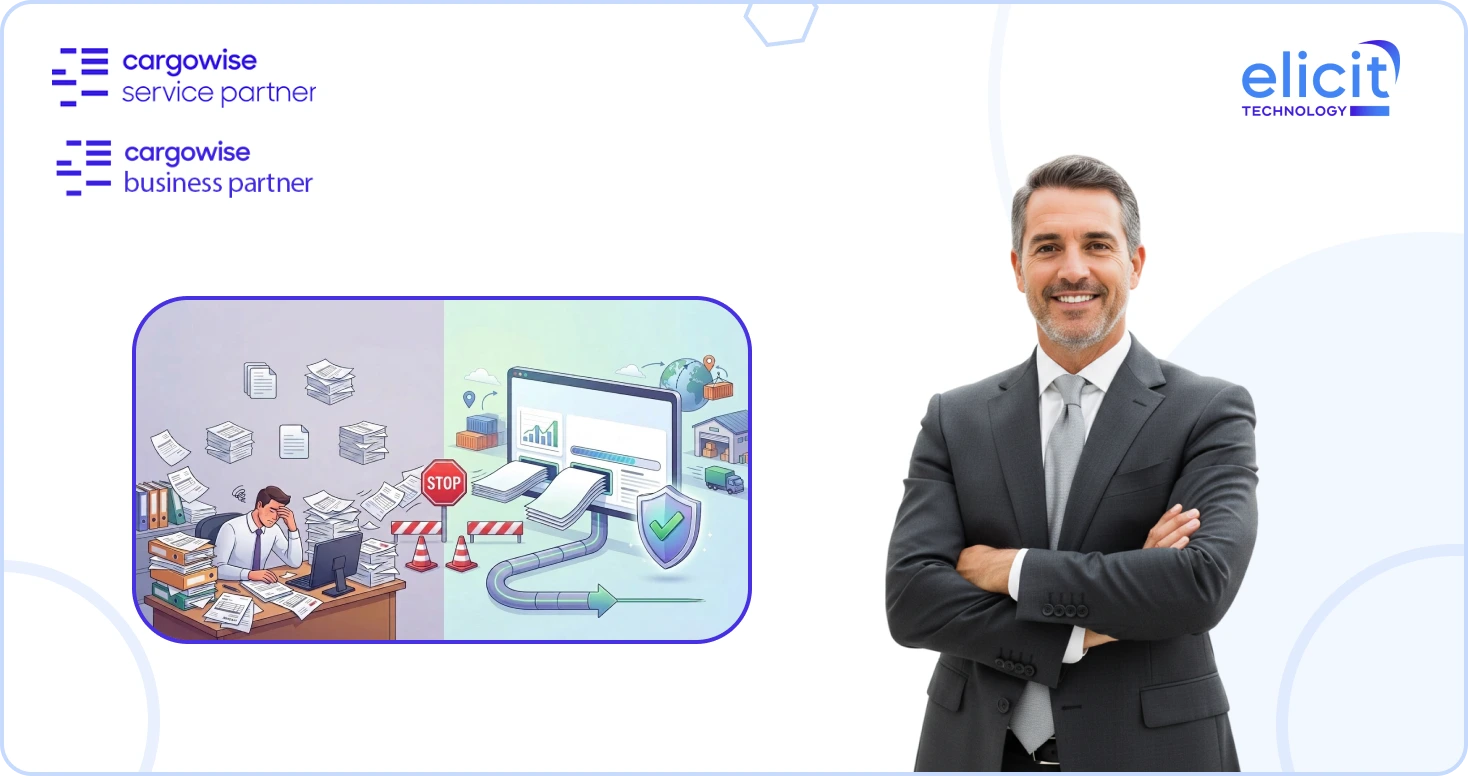
For a freight forwarder, a shipment milestone is a promise. When you tell a customer their container has been loaded, arrived at port, or cleared customs, they plan around it. Yet in most CargoWise operations, those promises still depend on someone remembering to open a job file and type in a date. Multiply that across hundreds of active shipments and the cracks appear fast: missed updates, wrong dates, and a customer service inbox full of “where is my cargo?” emails.
CargoWise milestone automation removes that manual bottleneck. Instead of relying on memory and keystrokes, the system captures events as they happen and updates every job, notification, and downstream task automatically. This guide breaks down what milestone automation is, why manual updates cost you more than you think, and exactly how to set it up so it works.
What is CargoWise Milestone Automation?
Milestone automation in CargoWise is the practice of letting the platform record and act on key shipment events, such as cargo received, in transit, vessel departed, arrived, and delivered, without an operator entering them by hand. Each milestone is tied to CargoWise’s event and workflow framework, so when a status is reached, the system can timestamp the job, advance the workflow, send a customer notification, and raise an exception if something is off track.
The engine behind this is the CargoWise workflow engine, which combines configurable milestones with triggers and actions. You define the milestones that matter for a given mode, lane, or customer, tell the system where the data comes from, and specify what should happen when each one lands. From that point, milestones update in real time as events flow in from carriers, tracking providers, and integrated systems.
Why do Manual Milestone Updates Cost Freight Forwarders So Much?
Manual milestone updates feel cheap because no one line-items them, but they quietly drain margin in several ways:
- Wasted operator hours. Time spent re-keying vessel dates and container events is time not spent resolving exceptions or winning new business.
- Error-prone data. Manual updates invite wrong dates, missed events, and inconsistent entries, and a single bad ETA can trigger a chain of poor decisions downstream.
- Delayed visibility. If a milestone is only updated once a day, your customer portal is always a step behind reality, undermining the real-time visibility clients now expect.
- Reactive customer service. Without automated alerts, your team learns about delays from an angry customer instead of from the system.
As CargoWise itself notes, manual data entry is time-consuming, resource-heavy, and expensive to keep accurate as volumes grow. Milestone automation attacks all four problems at once by making the update a byproduct of the event rather than a separate task.
How does the CargoWise Workflow Engine Automate Milestones?
The workflow engine turns a milestone from a passive date field into an active trigger. In practice, an automated milestone can:
- Auto-update the job status the moment an event is received, keeping the operational picture current.
- Send customer communications automatically as each leg of the journey is completed, along with any revised estimated arrival time.
- Close completed tasks and open the next ones, so shipments follow the correct process from the start.
- Generate and distribute documents and EDI messages tied to a status change, such as an arrival notice on “vessel arrived.”
- Raise exceptions for missed cargo-ready dates, diversions, or delays, pushing the right shipment to the top of someone’s queue.
Because triggers and actions are configurable, you can standardize milestones by mode (air, ocean, road, rail), by lane, by direction, or by customer SOP. That means a high-touch key account and a routine LCL shipment can each follow the milestone plan they actually need.
Which Data Sources Feed Automated Milestones?
Automation is only as good as the data feeding it. CargoWise milestones can be driven by several event sources, and the best setups blend them:
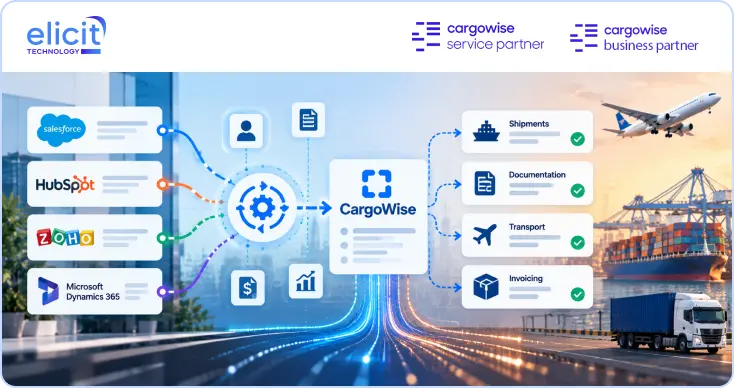
- Carrier integration: Direct connections to ocean carriers, airlines, road, and rail providers deliver bookings, confirmations, and status events straight into the job.
- Container and vessel tracking: Ocean and container tracking data, enriched with machine learning, updates milestones and flags at-risk containers so you can act before a delay becomes a problem, with land-side road and rail events extending visibility door to door.
- EDI: Electronic Data Interchange remains the backbone for standardized status events with carriers, customs, and trading partners, automating structured messages at scale.
- The Milestone Update API: For modern, real-time exchanges, an API can push events such as “shipment received,” “in transit,” and “delivered” directly into CargoWise, eliminating manual entry and keeping customer portals and order systems in sync.
Choosing the right channel matters. EDI is ideal for standardized, high-volume carrier and customs exchanges, while APIs shine for real-time, app-to-app updates with CRMs, customer portals, and order platforms. A well-designed operation uses both, mapped carefully to the milestones that drive customer decisions.
How do You Configure CargoWise Milestones for Accuracy?
Automating a messy process just produces mistakes faster. Before switching on triggers, get the configuration right:
- Map the milestones that matter: List the events your customers and internal teams actually rely on, and cut the ones that add noise rather than value.
- Standardize with templates: Build milestone and workflow templates by mode, lane, and customer so every job starts with the correct plan.
- Match milestones to SLAs, not habit: Configure triggers around the commitments in your customer agreements rather than legacy internal routines.
- Define exception rules: Decide what “late” or “missed” means for each milestone and let the system escalate automatically.
- Keep the data clean: Archive stale jobs and de-duplicate records so automated events attach to the right shipment.
This is where event configuration and milestone configuration inside CargoWise do the heavy lifting. Done well, they turn a generic ERP into a system that mirrors exactly how your business moves freight.
What Results can Freight Forwarders Expect from Milestone Automation?
When milestones update themselves, the operational gains compound. Operators reclaim hours previously lost to re-keying data and can focus on exceptions and service. Data accuracy improves because events come straight from the source. Customers get proactive, real-time updates instead of chasing your team, which strengthens retention and reputation. And managers gain a live, trustworthy view of the network, making capacity planning and disruption response far easier.
Just as importantly, milestone automation scales. As volumes rise, an automated milestone framework absorbs the growth without a matching rise in admin headcount, which is exactly what forwarders need in a market of thin margins and persistent labor shortages.
How can a CargoWise Partner Set Up Milestone Automation Correctly?
CargoWise is powerful precisely because it is deeply configurable, and that same flexibility is where many forwarders get stuck. Milestones fire at the wrong time, notifications overlap, or integrations miss events, and the automation ends up creating noise instead of clarity. A certified CargoWise service partner bridges the gap between the platform’s capabilities and your operational reality.
At Elicit Technology, our teams handle milestone configuration, event configuration, carrier integration, container tracking, and API services so your milestones are driven by reliable data and mapped to the way your customers actually judge your service. The result is automation you can trust rather than another dashboard to babysit.
Conclusion
Manual milestone updates are a hidden tax on every freight forwarder using CargoWise, costing hours, accuracy, and customer trust. Milestone automation flips the equation: events feed the system, the workflow engine acts on them, and your team is freed to manage exceptions instead of chasing data. With the right configuration and the right data sources, milestones stop being a chore and start being a competitive advantage.
Ready to make CargoWise update your milestones for you? Schedule a demo with Elicit Technology’s certified CargoWise consultants and see how milestone automation can transform your operations.